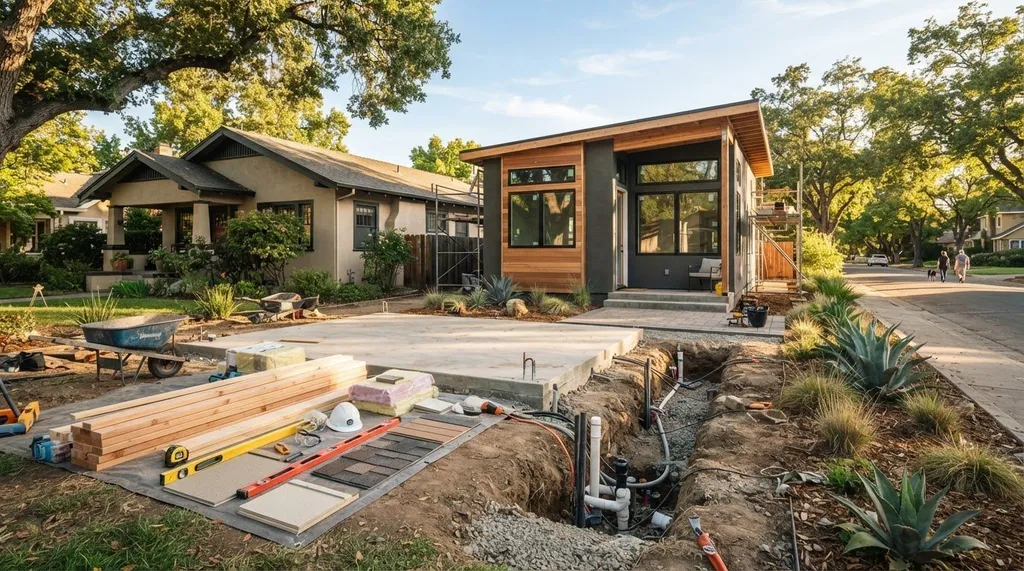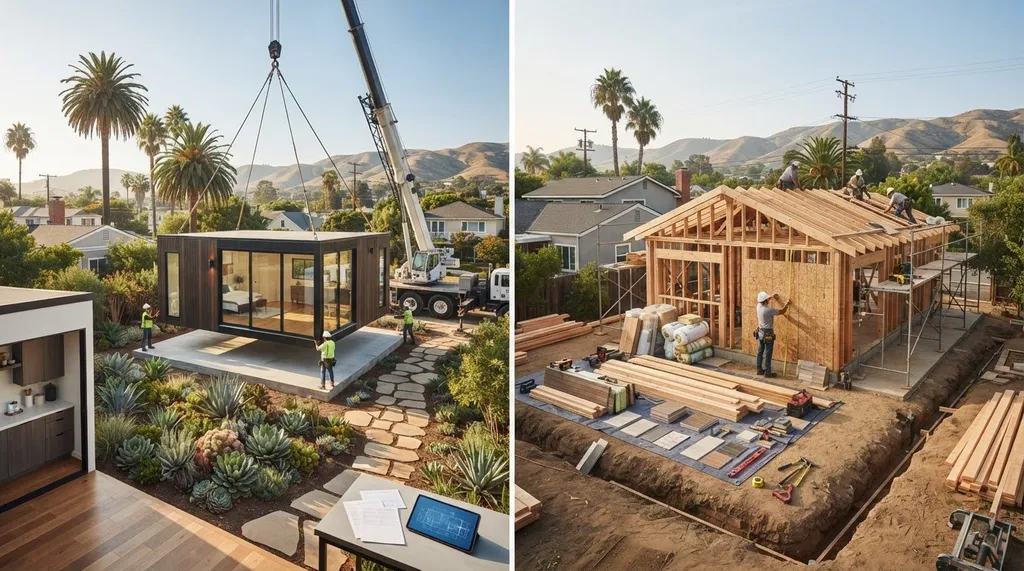

The closest ADU builder isn’t always the right fit. A search for “find adu builders in my area” can bring up general contractors alongside ADU specialists, while local requirements vary by city and county. It’s reasonable to wonder where to start, especially if your project is still taking shape.
A useful match depends on more than proximity. Your property’s location, the type of ADU you’re considering, and the local rules that may affect your project all help shape the search. You don’t need finalized plans to take an informed first step.
This guide explains how to find ADU professionals who serve your area, identify the project details that make a match more relevant, and prepare for a productive conversation. ADUDesk’s contractor matching service, Local ADU Rule Checker, city-specific guides, Project Planner, and ADU Cost Calculator can help you get oriented before connecting with professionals. Start with what you know, then use those details to narrow your next step.
Find ADU Builders in Your Area by Starting With Project Fit
Finding a genuinely local ADU builder takes more than typing your ZIP code into a search bar. Results may mix ADU specialists with general home-improvement listings, and a nearby business may not serve your property or have experience with the type of unit you’re considering. Start by defining what “local” and “relevant” mean for your project.
A useful match reflects both where the property is and what the project involves. That gives you a stronger starting point than choosing the closest listing, even when your plans are preliminary.
For a helpful overview of common ADU misconceptions, watch this video:
What does “in my area” mean for an ADU project?
For an ADU search, “my area” means the jurisdiction where the property is located, not just the city or ZIP code on your mailing address. In California, a home within Oakland city limits is in Alameda County, while a nearby property could fall outside the city in an unincorporated area. Those locations may involve different local processes. Identify the property’s jurisdiction first, then focus on professionals who serve that location and have relevant ADU project experience.
Broad directories can help you discover local contractors, but categories such as remodeling, home building, or design may not show whether a listing is relevant to ADUs. An ADU-focused search can narrow results by project type. Neither a nearby address nor a directory category alone tells you whether a professional serves your property or has handled a similar scope.
Which ADU project details help narrow the search?
Begin with what you know, not a finished set of plans. Note the property’s city or unincorporated area, whether it is a house or another residential property, and the kind of ADU you’re considering: detached, attached, or a conversion of existing space. Then describe your early goal, such as creating a home for family, a rental unit, or flexible living space. These details make a search or matching conversation more specific without requiring you to settle every design decision.
- Location: Record the property’s city and, if known, its county or jurisdiction.
- Project type: Identify a detached unit, attached unit, or conversion as your current direction.
- Open questions: Note known site conditions and what you still need to understand.
Use a California ADU rules guide (opens in a new tab) to begin understanding the local context, then confirm which jurisdiction applies to the property. You don’t need complete plans to take this step.
A local ADU builder match is a professional connection that fits both the property’s jurisdiction and the ADU project type, not simply the shortest distance from home. Keep that definition in mind as you compare search results and decide what information to share next.
How California Location and ADU Rules Shape a Local Builder Search
California homeowners can’t assume that one set of local ADU requirements applies everywhere. State law provides a broader framework, but the rules and processes relevant to a property can depend on its jurisdiction. The property address is an important starting point for understanding local context and narrowing a builder search.
The property’s jurisdiction matters because it helps identify which local ADU guidance and processes may shape project planning. A mailing address alone may not tell the whole story, especially near city boundaries or in unincorporated areas. Identify the city or county area where the property sits, then use guidance relevant to that location.
Why the property’s city or county matters
City-specific guidance can help you frame questions about a particular property, while county information may provide context for areas outside city limits. Los Angeles and San Diego illustrate why location-specific research matters: each has its own city context, and neither stands in for every California jurisdiction. A homeowner exploring Los Angeles ADU rules should focus on the property’s location in Los Angeles, rather than assume the same guidance applies in another city or an unincorporated area of the county.
Use the address to establish where to begin, then keep the jurisdiction attached to your project notes. If you’re considering a property in San Diego, for example, city-specific information about the San Diego ADU permit process can help you identify questions to investigate. County context can matter too, but it doesn’t automatically replace city guidance when the property is within city limits.
Use local rules as early project context
A local rule checker or city guide is an orientation tool. It can help you identify topics to explore, but it isn’t a permit approval, a property-specific determination, or a substitute for the applicable agency’s review. Treat the results as a way to make your early project brief more informed, not as a final yes-or-no answer about feasibility.
As you review the guidance, record questions rather than trying to resolve every detail at once. For example, note anything you want to understand about where a unit could fit, how your intended ADU type may affect planning, or what local process information you still need. These questions can clarify whether your next connection should focus on a detached unit, an attached addition, or a conversion.
- Record the jurisdiction: Include the property city and whether it appears to be within city limits.
- Capture open questions: Note issues raised by local guidance without treating them as settled conclusions.
- Keep project context together: Pair your location notes with your intended ADU type and early goals.
Once you’ve identified the location and the questions that matter, use ADU contractor matching (opens in a new tab) as a practical next step toward a relevant professional connection.
Compare Local ADU Builder Search Options by Project Relevance
There’s more than one way to look for an ADU professional. Broad directories, direct online searches, and ADU-focused matching each offer a different starting point. The useful question is which route helps connect your location and project needs to relevant professionals.
<table><thead><tr><th>Search option</th><th>ADU relevance</th><th>Local context</th><th>Project-preparation support</th></tr></thead><tbody><tr><td>Broad directories</td><td>Varies by category and listing details</td><td>Often organized around location</td><td>Usually focused on browsing professionals</td></tr><tr><td>Direct searching</td><td>Depends on the terms and pages you find</td><td>Can surface city or service-area information</td><td>Requires you to organize project details</td></tr><tr><td>ADU-focused matching</td><td>Centers the search on ADU professionals</td><td>Can take property location into account</td><td>ADU planning tools can help you prepare context</td></tr></tbody></table>
How ADU-focused matching differs from broad directories
A broad directory lets you browse categories such as general construction or home improvement. That can help you discover businesses, but it may take extra effort to determine which listings relate to ADUs. An ADU-focused matching service starts with the project category itself, keeping the search centered on ADU professional connections rather than a wide range of home services.
Location and project type still matter. A detached unit, an attached addition, and a conversion can raise different questions, so useful project context helps make the connection more relevant. Direct searching can complement the process by helping you explore service-area or project information available online.
What makes a local connection relevant to your project?
Think of relevance as the overlap between three details: where the property is, what kind of ADU you’re considering, and how far along you are. If you’re still exploring, a clear goal and a few known site conditions can be enough to describe your direction. You don’t need finished plans to explain what you hope to build or what questions remain.
If you’re considering how to find reliable ADU contractors, focus on giving the search or matching process meaningful context instead of relying on proximity alone. ADUDesk’s contractor matching service connects homeowners with ADU professionals. Its Project Planner, ADU Cost Calculator, Local ADU Rule Checker, and city-specific guides can help organize early information for projects in Los Angeles, San Diego, San Jose, Oakland, Sacramento, and San Francisco.
A match is a professional connection. Use it as a focused starting point, then carry your location, project type, goals, and open questions into the next stage of planning. That approach helps you find adu builders in my area with a clearer sense of what makes a connection relevant to your project.
Prepare a Clear Project Brief Before Finding an ADU Builder
You don’t need completed plans to start organizing an ADU project. A short first-pass brief can help you explain what you’re considering, show what’s already known, and identify where you need more information. Keep it practical. The goal is to make your next conversation more focused, not to solve every design or feasibility question on your own.
Build a useful first-pass ADU project brief
Start with the property location and broad project idea. Add your intended use and any site details you already know. If you’re unsure whether a detail is accurate, label it as an estimate or an open question rather than presenting it as fact.
- Property location: Note the city and, if known, the county or jurisdiction.
- Project type: Describe your current direction, such as a detached ADU, an attached unit, or a conversion.
- Intended use: Record whether the space is for family, rental use, or another goal.
- Known site conditions: Include observations such as existing structures, access, or utility questions, but don’t assume what they mean for feasibility.
- Open questions: List what you still need to understand about the property, local guidance, or project scope.
Separate information into three simple categories: confirmed, estimated, and unknown. For example, the property address may be confirmed, while the preferred ADU type is still an idea and the available site area remains unmeasured. This distinction keeps early notes useful without overstating what you know.
Turn early questions into a focused next step
Use the ADU Project Planner to organize priorities and pre-construction information. It can help turn a loose set of ideas into a clearer record of goals, known details, and next questions. The ADU Cost Calculator supports early cost exploration, but treat it as a planning tool rather than a final project quote. Don’t add a number to your brief unless you understand what it represents and which assumptions it depends on.
Before a professional conversation, review your notes and choose the questions that matter most right now. You might want to discuss how your preferred project type relates to the property, which unknown site details need attention, or what information would help refine the scope. A guide to questions to ask an ADU contractor can help you prepare. Keep questions open-ended where details still need professional input.
This preparation is enough to begin. If you’re ready to explore a local connection, find ADU contractors in your area (opens in a new tab) using the location and project context you’ve gathered. A clear starting brief makes “find adu builders in my area” a more focused search, even before your plans are complete.
Connect With ADU Builders in Your Area Through ADUDesk
Once you’ve identified where your property is and what kind of ADU you’re considering, you can move from general research toward a relevant professional connection. ADUDesk brings together contractor matching and early-stage planning resources, so you can organize project context while exploring professional connections. You don’t need a finished design or complete scope to get started.
What to expect from ADUDesk’s contractor matching service
ADUDesk’s contractor matching service connects homeowners with qualified ADU professionals. Your location and project context help frame that connection: a homeowner considering a garage conversion has a different starting point from someone exploring a detached unit, for example. Share the property city, the ADU type you’re considering, and the questions you’re working through to make the project context clear.
Approach the process as a practical sequence:
1. Share your location and project direction. Include the property’s city, your intended ADU type, and the goal you’re working toward. 2. Organize what you know. Note relevant site observations, local-rule questions, and details that are still estimates or undecided. 3. Explore a relevant professional connection. Use the information you’ve gathered to describe the project clearly through the matching pathway.
Preparation can continue alongside your search. ADUDesk’s Local ADU Rule Checker and city-specific guides can help orient your early research around the property’s location. The ADU Project Planner helps organize priorities and pre-construction information, while the ADU Cost Calculator supports early cost exploration. These tools help you prepare context; they don’t replace property-specific review or determine final project feasibility.
Take the next step with your local ADU project
You can begin even if you’re still weighing options. State your current direction, mark what remains uncertain, and use those notes to make the next conversation more focused. If local guidance raises questions, keep them alongside your project details rather than waiting until you have every answer. That gives you a useful starting point without pressure to finalize plans prematurely.
If you’re ready to explore a local professional connection, share your project context through ADUDesk’s contractor matching pathway. Start with what you know, then build on it as your understanding develops. Find ADU contractors in your area (opens in a new tab).
Take Your ADU Search One Step Further
You don’t have to resolve every project question before moving forward. Treat your next step as a way to turn what you know into a clearer conversation, and let what you learn shape the next decisions. If you’re ready to find adu builders in my area, begin with the property location and your current project direction. ADUDesk’s Local ADU Rule Checker, city-specific guides, Project Planner, and ADU Cost Calculator can support your preparation as your plans develop.
A useful connection is a starting point for exploring your project, not a requirement to have every decision made. Share the context you have and take the next step at a pace that feels manageable.
Ready to move forward? Find ADU contractors in your area through ADUDesk’s contractor matching service.
Frequently Asked Questions
Is an ADU builder the same as a general contractor?
Not necessarily. A general contractor may take on an ADU as part of broader residential work, while an ADU-focused professional concentrates on this project type. The title alone doesn’t establish fit: consider how the professional’s experience relates to your planned scope and location. For example, a homeowner in Oakland or San Jose can describe the ADU type and property location rather than relying only on a broad contractor category.
Can I find an ADU builder before I have approved plans?
Yes. You can organize your search and discuss your early project direction before plans are complete or approved. For a property in Sacramento, you might note whether you’re considering a detached unit or conversion, who may use the space, and which site details are still unknown. To find adu builders in my area, treat early conversations as project discovery and label estimates or ideas as tentative.
Do ADU builders serve more than one city?
Some professionals serve properties in multiple cities, but service areas vary. A builder based in Los Angeles, for example, may not serve every address in the surrounding county. Use the property location, not the nearest business address, as your starting point. For homes in San Diego or San Francisco, city-specific guidance can help you frame local questions, while the professional’s service area helps determine whether the connection is relevant.
How do I find an ADU builder for a garage conversion?
Describe the project as a potential garage conversion and share what you know about the existing space. Note whether the garage is attached or detached, its current use, visible condition, and any known utility details. For a San Jose property, keep observations separate from assumptions about feasibility. Existing space doesn’t automatically establish that conversion is suitable, so record unresolved questions for a professional to address.
How much does it cost to hire an ADU builder?
There isn’t one price that applies to every ADU project. The scope, property conditions, local requirements, and design decisions all affect project estimates. Use an ADU Cost Calculator to explore planning assumptions, not as a contractor quote or guaranteed total. As your project becomes clearer, keep the assumptions behind any early estimate visible so you can distinguish initial planning from a project-specific estimate.
Should I check local ADU rules before looking for a builder?
Yes, reviewing relevant local guidance early can help you identify questions to carry into project planning. Start with the property’s city or county, then note topics that could affect your preferred ADU type or next steps. A rule checker or city guide offers orientation, not a permit decision. Keep the address and your questions together, especially if you’re comparing properties in different California cities.
Can ADUDesk build or design my ADU?
ADUDesk connects homeowners with ADU professionals and supports pre-construction preparation. Homeowners can use its Project Planner, ADU Cost Calculator, Local ADU Rule Checker, and city-specific guides to organize early information. If your property is in Los Angeles, Oakland, or another covered California city, include that location when seeking a professional connection so the project context is clear.