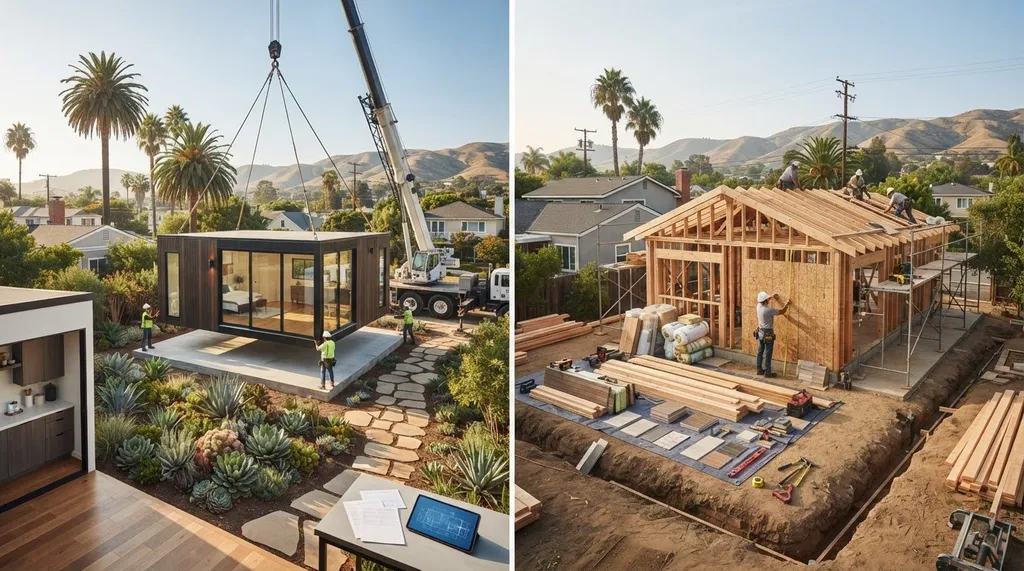

What if the biggest factor in the cost to build an adu in sacramento isn’t the unit itself, but what your property needs before construction can begin? A detached ADU may cost around $200,000 to $350,000, while a garage conversion may fall around $75,000 to $140,000. Treat these as starting ranges, not estimates for a specific property.
Online prices can be hard to compare because a simple price per square foot doesn’t show the full scope. Unit type, site work, utility connections, permits, and professional fees can all shift the total. Existing conditions, such as an electrical panel or sewer connection that needs upgrading, may add work that an early estimate doesn’t capture.
This guide explains the main Sacramento ADU budget categories, compares common project types, and highlights site factors that can affect your estimate. You’ll also learn how to check local rules and organize your project scope before requesting proposals from qualified ADU contractors.
What Does It Cost to Build an ADU in Sacramento in 2026?
The cost to build an adu in sacramento varies with unit type, project scope, site work, and the jurisdiction responsible for the property. Sacramento-area planning ranges current to October 2026 put a 600-to-1,200-square-foot detached ADU at $200,000 to $350,000, an attached ADU at $185,000 to $310,000, a 350-to-500-square-foot garage conversion at $75,000 to $140,000, and a JADU at $80,000 to $140,000. These are broad project totals, not a price for your lot.
Before comparing figures, check what each one includes. A starting price may exclude site preparation, permits, utility connections, or finish selections. Two similar-looking totals can describe very different scopes if their exclusions don’t match.
For local context, this video shares real ADU cost examples from a Sacramento builder:
Planning estimate: An early budgeting tool that uses stated assumptions to frame likely project costs. It helps you compare options, but it isn’t a fixed price or a construction commitment.
Contractor proposal: A project-specific offer based on a defined scope and available site information. Its usefulness depends on how clearly inclusions, exclusions, and assumptions are documented.
Why Sacramento ADU estimates differ from one property to another
Access, grading, existing structures, and utility routes all affect the work a site may need. A narrow side yard can make it harder to move equipment and materials, while a long route to existing services can add scope. Conditions that aren’t apparent at the outset may also emerge during property assessment. These factors matter alongside unit size and finish level.
Start by establishing whether the parcel is within the City of Sacramento or in unincorporated Sacramento County. Review paths and requirements can differ by jurisdiction and parcel conditions. ADUDesk’s Sacramento local ADU rules (opens in a new tab) supports an initial location-aware check. Verify current requirements with the responsible jurisdiction as planning progresses.
What an early ADU budget can, and cannot, tell you
An early feasibility estimate helps you compare a conversion with a new detached unit and identify cost categories to investigate. It can’t account precisely for every design decision or concealed site condition. As the scope develops, design-stage pricing can draw on more detailed plans, while a construction proposal should reflect a defined project rather than a broad online range.
Record the assumptions behind your first estimate so you can refine it consistently:
- Unit type and approximate floor area
- Expected finish level and key features
- Known access, grading, structure, and utility conditions
- Jurisdiction and any items excluded from the advertised figure
ADUDesk’s cost calculator helps organize an early, project-specific estimate around those inputs. Treat the result as a planning reference, then update it as you clarify the property and project scope.
Which Costs Belong in a Sacramento ADU Build Budget?
A useful budget covers more than the cost of building the unit. Separate construction from professional services, permits, property-specific preparation, and a reserve for unknowns. This makes it easier to see what an estimate covers and identify costs that may sit outside a quoted starting price.
For a clearer view of the cost to build an adu in sacramento, organize your working budget into these categories:
- Direct construction: Site preparation included in the build scope, foundation, framing, roofing, exterior work, interior systems, and installation.
- Design and professional services: Plans, design work, engineering, surveys, or reports the project requires. Record these separately so they don’t disappear inside a general construction line.
- Permits and inspections: Application and review charges, required inspections, and other jurisdiction-related items. Exact charges depend on current rules, the project, and the property’s location.
- Site work and utilities: Demolition, grading, drainage, access preparation, and any needed electrical, water, sewer, or other service connections.
- Finishes and owner selections: Cabinets, flooring, fixtures, appliances, and other choices that can change the final scope.
- Contingency: A planning reserve for unresolved conditions or scope changes. Set it with the project’s knowns and unknowns in mind rather than assuming one percentage fits every property.
An all-in ADU budget includes the defined construction scope, professional and permit-related costs, site work, utility connections, selected finishes, and a clearly identified contingency. State exclusions separately.
Construction, design, and permit-related budget categories
Separate what’s included in a proposal from what’s estimated or left to you. A finish allowance is a placeholder for a selection, not necessarily a promise that every preferred product fits that amount. Owner-selected upgrades may also change the scope. List design and engineering as distinct budget lines, whether arranged separately or included in a broader proposal.
Give permit and inspection costs their own place in the budget. Don’t assume an online figure or an older estimate reflects current charges. Requirements depend on the jurisdiction and project details. Use Sacramento ADU rule information (opens in a new tab) as a planning reference, then verify current requirements with the responsible jurisdiction.
Site work, utilities, and contingency
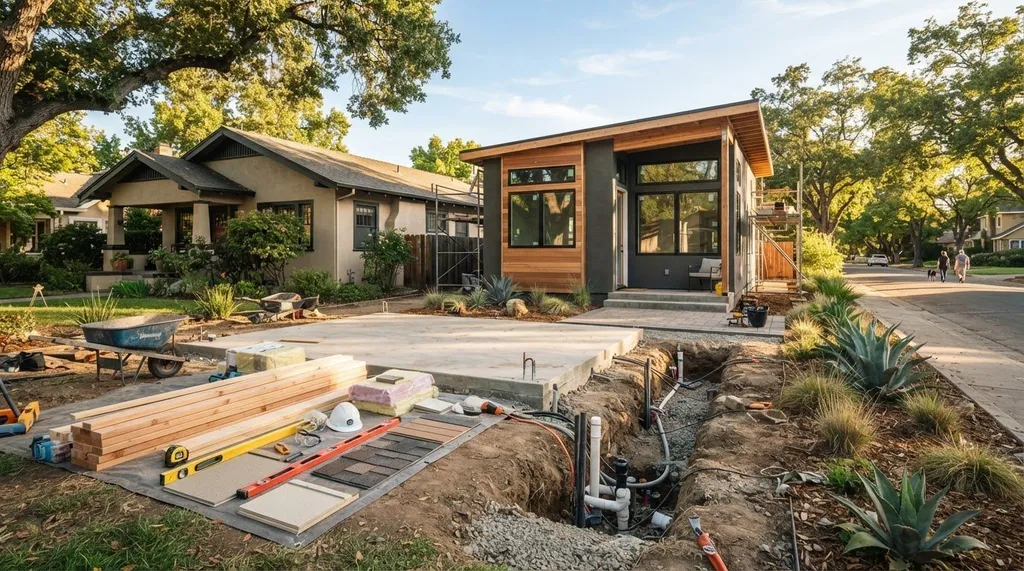
Property conditions can add work that a unit-only price doesn’t capture. Demolition may be needed before construction, and grading or drainage work may be part of site preparation. Tight access can affect how materials and equipment reach the build area. Utility connections are specific to the lot, so don’t assume existing electrical, water, or sewer service is ready for the ADU.
Keep a short assumptions list alongside the budget. Mark each item as included, excluded, or still unknown. This makes proposals easier to compare and shows where an allowance could change. As the scope becomes clearer, ADU contractor matching (opens in a new tab) can help move from budget planning to project conversations.
How ADU Type and Site Conditions Change Sacramento Build Costs
Project type shapes the work, but it doesn’t determine the budget on its own. A conversion may reuse an existing structure, while an attached or detached ADU involves a different mix of connections, building work, and site preparation. Property conditions can change any of those assumptions.
Use this comparison to identify the main questions behind each scenario. To compare the cost to build an adu in sacramento fairly, keep the planned floor area and finish level as consistent as possible. Otherwise, differences may reflect size or selections rather than the type of unit.
<table><thead><tr><th>Project type</th><th>Potential scope advantages</th><th>Conditions and unknowns to assess</th></tr></thead><tbody><tr><td>Garage conversion</td><td>May reuse an existing structure and some of its building footprint.</td><td>Check the garage’s condition, how its layout may need to change, and what upgrades are required for the intended use. Existing walls and services don’t automatically mean the space is ready to convert.</td></tr><tr><td>Attached ADU</td><td>Shares a connection with the main home and may allow a compact relationship between the two units.</td><td>Consider how the addition meets the existing structure, where services can connect, and whether the layout affects the home or yard. The amount of new construction depends on the design and site.</td></tr><tr><td>Detached ADU</td><td>Creates a separate structure with more independence from the main house.</td><td>Assess the build location, access for construction, site preparation, and the route and capacity of needed utilities. A separate building may require more work beyond the unit itself.</td></tr></tbody></table>
Garage conversions, attached ADUs, and detached units
Reusing a garage can reduce the amount of new structure to build, but its current condition and proposed layout matter. If the structure needs repairs or changes for the planned use, the assumption that you can simply “convert what’s there” may no longer describe the full scope. Confirm which upgrades and finish selections are included in the comparison.
An attached and a detached unit both involve new construction, but their connection to the home and placement on the parcel create different planning needs. Compare like with like: use a similar floor area, finish level, and list of features, then note differences in foundation, connection, access, and site work.
Project type alone can’t determine a final ADU budget. Existing conditions, required scope, and site constraints shape the cost alongside the unit configuration.
Property conditions that can shift an estimate
Look beyond the footprint. A slope may affect grading, drainage needs can influence site preparation, and demolition may be necessary before work begins. Limited work space or a difficult route from the street can also affect how materials and equipment reach the build area. These are property-specific questions, not assumptions to apply uniformly across Sacramento.
Assess utility distance and capacity separately. Electrical, water, sewer, and other connections may require different work depending on the parcel and existing service. Record what’s known and flag what still needs evaluation. This gives a project estimate a clearer basis and makes it easier to see whether two scenarios differ because of ADU type or the lot.
How to Build a More Reliable Sacramento ADU Budget
A dependable budget takes shape in stages. Start with the property and project assumptions, then check local requirements and site constraints before comparing contractor proposals. This helps prevent building an estimate around rules or work that don’t apply to your parcel.
1. Define the project. Write down the intended unit type, approximate floor area, planned use, and finish level. Note features that could change the scope, such as a separate entrance or kitchen. Keep these assumptions consistent as you explore options. 2. Confirm the parcel’s jurisdiction. Determine whether the property is within the City of Sacramento or in unincorporated Sacramento County. A Sacramento mailing address alone doesn’t identify the agency responsible for local reviews or fees. The Sacramento ADU local rules guide (opens in a new tab) can help you begin a location-specific check. 3. Review lot constraints. Consider the available build area, access, slope, drainage, existing structures, and likely utility routes. Record what you know and mark anything that needs further evaluation. A parcel review may show that your preferred layout or location needs adjustment before you settle on a budget. 4. Check current requirements and cost categories. Verify permit and inspection requirements, applicable impact fee information, and utility considerations with current sources for the property’s jurisdiction. Requirements and charges can depend on parcel and project details, so don’t treat an old fee assumption as current or universal. 5. Prepare a shared scope for proposals. Describe the unit, size, finish assumptions, known site work, expected connections, and exclusions. Use the same written scope when requesting contractor proposals. Compare what each proposal includes, what it treats as an allowance, and what remains outside the stated scope.
Use current local information without treating it as a quote
Local rules and fee information help shape your budget assumptions, but they don’t establish a complete construction price. Utility provider information, permit guidance, and a project estimate each address different parts of the picture. Keep the source and date beside each assumption, and update it as the scope or available property information changes.
Use the ADU cost calculator to organize an early estimate around your project details, not as a fixed quote. It helps structure budget assumptions before contractor conversations. The cost to build an adu in sacramento is easier to evaluate when the unit type, lot questions, inclusions, and unknowns are recorded together.
Before requesting proposals, create a concise project brief with your preferred scenario and unresolved questions. ADUDesk’s project planning tools help organize those next steps. Once the scope is ready, connect with ADU contractors (opens in a new tab) to move into project-specific conversations.
Turn Your Sacramento ADU Budget into a Contractor-Ready Plan
A planning estimate becomes more useful when you can explain what it assumes. Before contractor conversations, turn your preferred ADU scenario, known property details, and unresolved questions into a short written project brief. It won’t eliminate every unknown, but it gives everyone a clearer starting point.
What to prepare before requesting contractor matches
Gather the basics in one place. Note the property location and jurisdiction, the ADU type you’re considering, its approximate size, and how you expect to use it. Add known site conditions, such as an existing garage, limited access, slope, or a possible utility connection challenge. Separate confirmed details from assumptions so early estimates don’t appear more certain than they are.
Include your budget expectations and the choices behind them. For example, record the finish level you have in mind and whether your scope assumes appliances or particular features. List questions that still need answers, including property conditions or requirements that may need professional review. A written brief can cover:
- Preferred ADU type, approximate size, and intended use
- Known property and access conditions
- Budget assumptions, desired finishes, and proposed inclusions
- Unresolved questions and items needing further assessment
Keep the brief consistent as you compare project proposals. If each contractor responds to a different size, finish level, or list of inclusions, the totals won’t give you a clean comparison. A shared scope helps reveal whether a difference comes from proposed work, an allowance, or an exclusion.
If you’re preparing for those conversations, the reliable ADU contractor matching guide offers a useful next reference. The aim is to move from a broad idea of the cost to build an adu in sacramento toward a defined scope that contractors can respond to clearly.
Move from estimate to informed next steps
ADUDesk supports pre-construction planning. Use the ADU Cost Calculator to organize an early project estimate, the Project Planner to structure next steps, and local rule-checking tools to inform location-aware planning. These tools help you prepare; ADUDesk doesn’t provide construction, architectural design, or engineering services, and an early estimate isn’t a fixed construction quote.
Contractor matching connects homeowners with qualified ADU professionals. It’s a practical step once you’ve documented your preferred scope and open questions, not a guarantee of a particular price or construction outcome. Keep your project brief and budget assumptions on hand, and update them as you learn more about the property.
Ready to take the next step? Find ADU contractors for your Sacramento project (opens in a new tab).
Take Your ADU Budget into the Next Conversation
Your first estimate doesn’t need to answer every question. It should make your priorities and open decisions clear enough to guide the next conversation. As you refine the cost to build an adu in sacramento, keep your project assumptions together and update them when you learn something new about the property or scope.
ADUDesk supports this pre-construction stage with planning tools, including an ADU cost calculator and local rule checker, alongside connections to qualified ADU contractors. The platform also provides city-specific ADU guides for Los Angeles, San Diego, San Jose, Oakland, Sacramento, and San Francisco. Use these tools to prepare, then bring your written project brief into contractor discussions. A clear starting point helps you focus on the choices that matter without treating an early estimate as a final commitment.
Find ADU contractors for your Sacramento project (opens in a new tab) and take the next step with a more organized plan. You can move forward one informed decision at a time.
Frequently Asked Questions
How much does it cost to build an ADU in Sacramento in 2026?
A reliable 2026 figure depends on unit type, project scope, property conditions, and current local requirements. Compare dated Sacramento-area estimates only when their inclusions and exclusions match, including site preparation, utility work, and finishes. Then refine the budget for your parcel and chosen design. A published range or calculator can help organize early assumptions, but it isn’t a contractor proposal or a guarantee of final cost.
Is it cheaper to convert a garage into an ADU in Sacramento?
Not necessarily. A conversion may reuse an existing structure, but the advantage depends on the garage’s condition and the work needed to make it suitable. Structural or code-related upgrades, layout changes, utility connections, and access can all change the scope. For a fair comparison with new construction, use the same approximate size, finish level, and included features. Base your decision on an assessment of the garage and an itemized scope, not the project label alone.
Can I estimate my Sacramento ADU cost before I have final plans?
Yes. Start with a defined unit type, approximate size, finish assumptions, and the site conditions you already know. Keep unknowns visible in your notes rather than folding them into one figure. An ADU cost calculator can help organize these early assumptions. As design details develop and local requirements are reviewed, refine the estimate. Contractor proposals based on a clearer scope provide another project-specific planning reference.
Does building an ADU in Sacramento increase property taxes?
It may affect your property tax assessment, but the treatment depends on the property and applicable assessment rules. Don’t assume the entire property will be reassessed in the same way simply because you add an ADU. Contact the Sacramento County Assessor or a qualified tax professional for current guidance specific to your parcel and project. Keep this question separate from construction budgeting, since an ADU build estimate doesn’t determine your tax liability.
Can I rent out a Sacramento ADU to help recover its construction cost?
Potential rent may contribute to expenses, but it can’t establish a dependable payback period on its own. Rental income depends on lawful use, applicable local requirements, occupancy, market conditions, operating costs, and vacancy. Treat rent as a separate financial scenario from the construction budget, and account for expenses rather than comparing gross rent directly with build cost. Verify current rules and tax implications before relying on projected rental income.
What happens if unexpected site conditions increase my ADU budget?
New information about a property can lead to a revised scope, schedule, or price. Review the project documents to understand how the issue affects the work, and make sure any change is described and approved through the agreed process. Before work begins, document assumptions and proposal exclusions to establish a clear baseline. Set a contingency that reflects known project risks, but remember that a reserve can’t remove uncertainty or guarantee a final cost.
Are permit fees included in a Sacramento ADU contractor estimate?
Not always. Proposal formats vary, and government permit charges or third-party costs may be handled separately from contractor work. Review the itemized scope to see what’s included, excluded, or listed as an allowance. Confirm whether the property falls within the City of Sacramento or Sacramento County, then check current charges with the responsible jurisdiction. City and county requirements may differ, so don’t rely on a fee assumption from another property or an older estimate.