

Could your San Francisco lot support a granny flat, even if the rules you’ve read seem to disagree? The answer depends on more than a citywide overview of granny flat regulations san francisco. Your property, the type of unit you’re considering, and the review pathway can all affect what may be possible.
That uncertainty is understandable. California requirements and San Francisco rules overlap, while a general summary may not address your parcel’s specific conditions. A rule that applies to one project or lot may not settle the question for another. Early research is useful, but it is not the same as official city approval.
This guide explains how to identify the project type and parcel details to research, compare common ADU options, and prepare for permitting questions. It also lays out a practical sequence for moving from initial research to project planning. Start with the unit you’re considering, then work through the property details and requirements that could shape your next step.
What does granny flat mean under San Francisco ADU regulations?
Homeowners often use “granny flat,” “in-law unit,” and “ADU” to describe secondary housing on a residential property. In planning and permitting, the category matters. An accessory dwelling unit (ADU) is a separate home associated with a primary residence on the same property. A familiar name does not determine how the city will classify a proposed space or which requirements apply.
The granny flat regulations san francisco homeowners need to research depend partly on the proposed unit type and the parcel’s conditions. Use this section to understand the terminology and identify review questions, then check current California and San Francisco requirements for your project before relying on a classification or preparing an application.
Granny flat, ADU, and JADU: how the terms differ
An ADU may be planned as a detached structure, added to a primary home, or created by converting space in an existing building. These are different project approaches, and the best fit depends on the property and applicable requirements.
A junior accessory dwelling unit, or JADU, is a distinct category generally associated with a smaller living space within a single-family home. Its rules can differ from those for other ADUs, so don’t assume a space called an “in-law unit” qualifies as a JADU. Compare the proposed space’s configuration and location with current California requirements and San Francisco guidance before settling on a category.
Why San Francisco rules need a property-specific reading
Two homes on the same block can raise different review questions. Zoning and lot context can affect which planning information to review, while existing structures and site conditions can shape building and safety review. A conversion inside an existing building, for example, starts from different conditions than a new detached unit.
Keep the layers of review distinct. California law provides a statewide framework for ADUs, while San Francisco applies local planning and building review to projects. The relevant details depend on the unit category and property, so a general summary is a starting point for research, not a decision about your lot.
For a focused starting point, consult the San Francisco ADU rules guide (opens in a new tab). Use it to organize your questions, then verify current procedures and parcel-specific requirements with the relevant city sources.
Which California and San Francisco granny flat rules should you check?
Think of the rules as two connected layers. California law establishes a statewide ADU framework, while San Francisco’s planning and building review applies that framework to local procedures and a specific property. Start with the California ADU rules overview for the state layer, then confirm details against current official sources. The table below is a research map, not a determination that a particular project qualifies.
<table><thead><tr><th>Topic</th><th>State framework</th><th>San Francisco review</th><th>What the owner must verify</th></tr></thead><tbody><tr><td>Unit classification</td><td>State rules distinguish ADUs from JADUs and set the framework for each category.</td><td>City guidance and application procedures determine how a proposed unit is handled locally.</td><td>Whether the plan is detached, attached, a conversion, or a JADU, and which current definitions apply.</td></tr><tr><td>Zoning and lot context</td><td>State law shapes which local standards apply to ADU proposals.</td><td>San Francisco Planning provides parcel and planning context for the local review.</td><td>Property location, zoning, lot characteristics, existing structures, and any relevant local provisions.</td></tr><tr><td>Building and safety review</td><td>State requirements interact with applicable building and safety codes.</td><td>The Department of Building Inspection provides information on building review and permit procedures.</td><td>Current submittal requirements and the building, safety, and utility questions raised by the proposed work.</td></tr><tr><td>Site-specific overlays</td><td>Statewide ADU provisions don’t resolve every parcel-specific review question.</td><td>Local records can help identify whether additional site conditions need attention.</td><td>Whether historic status or other site constraints affect the review of this particular project.</td></tr></tbody></table>
State ADU law and local implementation
Separate two questions: what the current California framework provides, and how San Francisco processes a particular application. A state provision does not by itself confirm a parcel’s eligibility, explain every local procedure, or guarantee a permit outcome. Check current state guidance and the San Francisco Planning Department ADU guidelines (opens in a new tab) before relying on a rule summary. Verify forms, review pathways, and code references when you prepare to apply.
San Francisco zoning, building review, and site conditions
Start with the property, not a citywide assumption. Review zoning and available property records through San Francisco Planning, then consult the Department of Building Inspection for applicable building review. Check existing legal conditions and whether historic status or another site-specific factor raises questions. Confirm any overlay and its effect through current city sources. This property-first approach makes granny flat regulations san francisco easier to research without mistaking general guidance for an official decision.
Can your San Francisco lot support a granny flat? Compare unit types and constraints
A tight lot, older home, or crowded backyard doesn’t automatically rule out a granny flat. Feasibility depends on the proposed unit, the property’s existing conditions, and the requirements that apply to that site. Use early research to identify practical questions and compare options, rather than treating a general guide as an eligibility decision.
Compare the main options by how they use the property:
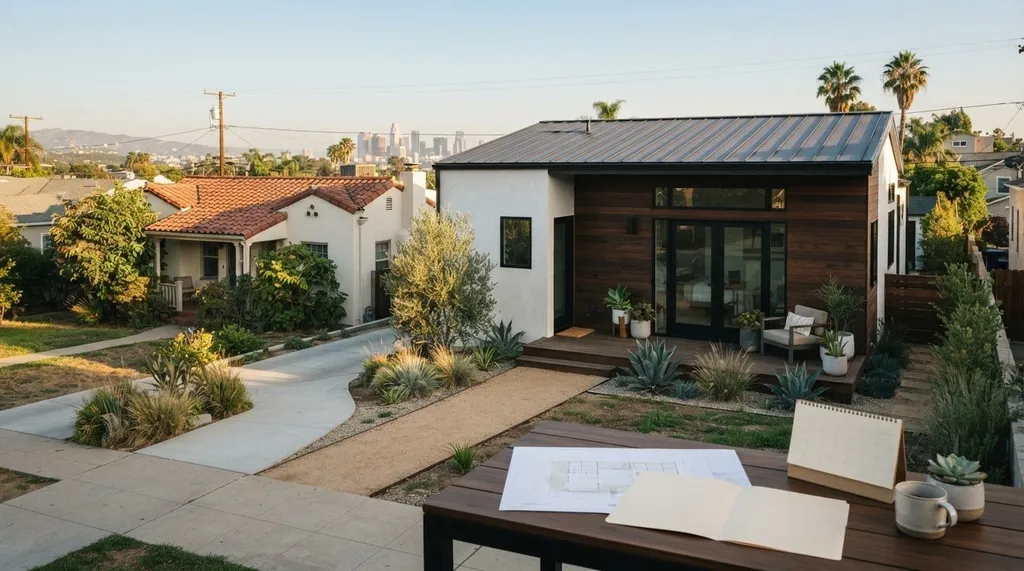
- Detached ADU: A separate structure, often considered for a yard or other open area. Assess available space, access, privacy, and potential utility connections.
- Attached ADU: A unit connected to the primary home. Consider how its placement affects access and the relationship with existing building systems.
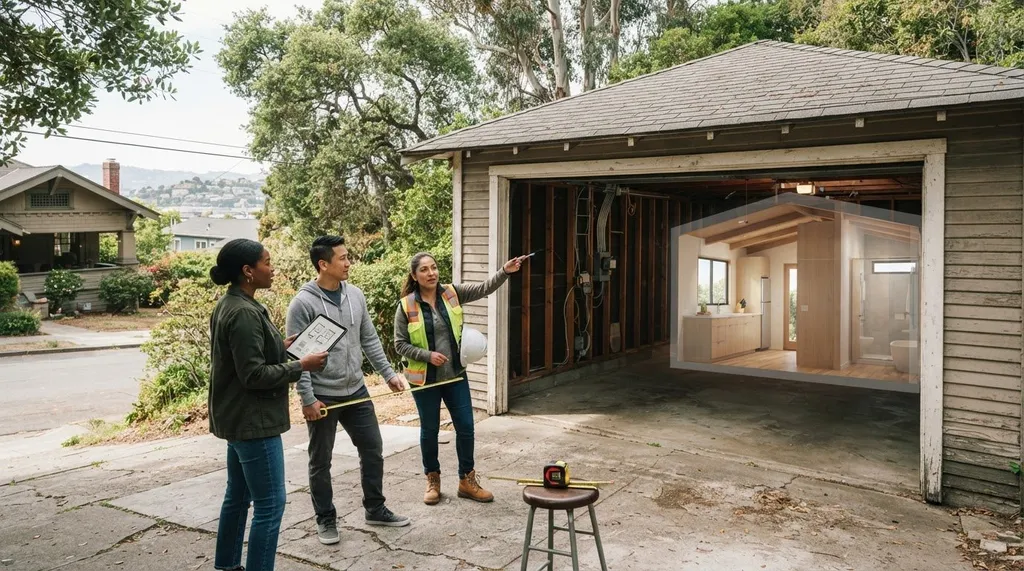
- Garage or basement conversion: Uses existing space, but its current condition, layout, access, and utility needs require review.
- JADU: A distinct category associated with space within a primary residence. Classification matters because its requirements may differ from those for a separate ADU.
Detached, attached, and converted-space options
Each approach has different planning considerations. A detached unit may offer separation from the main home, while an attached addition may connect more directly to existing systems. A conversion starts with an existing structure, but that alone does not establish that it can be used as proposed. Use these differences to frame initial questions. Then verify applicable size, height, setback, access, and building requirements with current official sources.
JADUs and parcel-specific constraints
Don’t classify a space by its everyday name alone. A JADU and a separate ADU are different concepts, and requirements can depend on the unit’s location and configuration. Check current state and San Francisco guidance on the physical, space, and occupancy requirements before choosing a category.
Look beyond the building footprint, too. Existing structures, utility access, privacy, and routes to the proposed unit can all shape feasibility. Depending on the property, historic status, coastal considerations, fire-safety conditions, or other site constraints may call for closer review. Confirm whether any of these apply to your parcel and what they mean for the project.
For a broader screening framework, see the ADU feasibility check guide. Use it to organize what you know about the property and what still needs confirmation. The granny flat regulations san francisco that matter to your project need to be checked against current city guidance and the parcel’s actual conditions.
How to verify San Francisco granny flat requirements before applying
Use a staged process to turn general research into property-specific questions. Early feasibility work helps organize decisions, but it isn’t an official city review. First gather parcel information and research the rules. Then confirm application requirements before preparing a permit submission.
A practical parcel and rule-checking sequence
1. Identify the property and project. Record the address, what you know about the existing building, and the unit type you’re considering, such as a detached ADU, conversion, or JADU. 2. Review parcel records and zoning. Use current San Francisco Planning resources to check available property and zoning information. Note anything that needs clarification instead of treating a map or general guide as a final decision. 3. Compare the relevant rules. Check current California ADU guidance alongside San Francisco’s planning information. Identify which framework and local procedures relate to your proposed unit. 4. List site and building questions. Note items to verify, including existing legal conditions, possible overlays, building review, access, utilities, and any documentation the city identifies as relevant. 5. Organize open questions. Separate confirmed information from unanswered questions. This makes follow-up research more focused and helps keep assumptions from becoming project requirements.
ADUDesk’s project planner and other planning resources can help turn this research into decisions and next steps. Use official city sources to determine the procedures that apply to your project.
What to clarify before permit submission
Before preparing an application, confirm the current review departments, forms, submittal materials, and review pathway through San Francisco’s official sources. Procedures can change, so use current instructions rather than an older checklist or a general explanation. If a site condition or classification is unclear, record the question and identify the city resource that can address it.
Move from initial screening to application preparation with an organized picture of the property, proposed unit, and outstanding requirements. A general guide cannot promise approval, a timeline, or an exemption. The granny flat regulations san francisco relevant to your project depend on current rules and property-specific review.
Once you’ve clarified the project scope and local requirements, ADUDesk’s contractor matching service (opens in a new tab) can connect you with qualified ADU professionals as you consider the next phase.
Turn San Francisco granny flat rules into a clear project plan
Turn your research into a sequence you can act on: identify the unit type, check the parcel context, confirm current requirements, and organize the project decisions that remain. This separates what you know from what still needs official confirmation and gives you a more useful starting point than a broad question about whether your property can support a granny flat.
Use local rule information to organize your next steps
Use the San Francisco ADU rules guide (opens in a new tab) to structure your property questions and identify topics to verify. As you review information, keep a short project brief with three clear categories:
- Confirmed facts: Your property address, information you’ve found about the existing building, and the unit type you’re considering.
- Open questions: Items such as zoning details, site conditions, utilities, building review, and application materials that still need clarification.
- Sources checked: The current state and city pages you consulted, with notes on what each source helped answer.
This brief won’t replace an official determination or permit review. It gives you a practical way to track research, spot gaps, and prepare for the next decision. Treat granny flat regulations san francisco as a starting point for property-specific checks, not as a checklist that guarantees eligibility or approval.
Move from early research to contractor conversations
Once you have a clearer unit concept and a record of property information and unresolved questions, you can have more focused project discussions. Knowing whether you’re exploring a conversion or a separate unit, for example, helps frame the scope and site questions to discuss. Keep updating your brief as you confirm current local requirements.
ADUDesk’s project-planning resources and local rule information support pre-construction preparation. Its contractor matching service connects homeowners with qualified ADU professionals. Use official San Francisco sources for applicable procedures and permit decisions, and bring organized project information to conversations about the next phase. ADUDesk also provides city-specific ADU guides for homeowners researching projects in Los Angeles, San Diego, San Jose, Oakland, Sacramento, and San Francisco.
Find ADU contractors for your project (opens in a new tab).
Take your next step with a clearer project brief
A granny flat project starts with the right questions, not an assumption about what your lot can support. Identify the unit type you’re considering, review the parcel and existing structures, then confirm current California and San Francisco requirements through official sources. The granny flat regulations san francisco that matter to your plans are shaped by both the project and the property.
Keep confirmed facts, open questions, and source notes together. ADUDesk’s city-specific rule information and project-planning resources can help you prepare, while official city sources provide the applicable requirements and permit decisions. Once your project scope and local requirements are clearer, ADUDesk can connect you with qualified ADU professionals for the next stage of project conversations.
Find ADU contractors for your project (opens in a new tab) and move forward with a more organized starting point. Use ADUDesk’s planning resources and contractor matching service to prepare for your next project decision.
Frequently Asked Questions
Can I build a granny flat on my San Francisco property?
Possibly, but eligibility depends on your parcel, proposed unit type, current California and San Francisco rules, and site conditions. A detached unit and a garage conversion can raise different questions. Review current zoning, property information, and site-specific factors before deciding how to proceed. San Francisco Planning and the Department of Building Inspection are key official sources for property-specific guidance; a general checklist can’t confirm approval.
What are the rules for a granny flat in San Francisco?
The rules combine California’s ADU framework with San Francisco zoning, planning, and building review. Which requirements apply depends on the unit’s form and the property, so a summary of granny flat regulations san francisco can guide research but can’t settle every parcel-specific question. Check current state and city guidance for the proposed project, including applicable size, setback, building, or permit requirements. Use current sources rather than relying on figures that may have changed.
Is a granny flat the same as an ADU in San Francisco?
“Granny flat” is a common informal term, while “accessory dwelling unit,” or ADU, is generally the regulatory term used in planning materials. A junior accessory dwelling unit, or JADU, is a separate category with its own criteria. The name a homeowner uses doesn’t determine how the city classifies a space. Identify whether you’re considering a detached, attached, converted-space, or JADU project before researching its requirements.
Can I convert a garage or basement into a granny flat in San Francisco?
A garage or basement conversion may be a project option, but it isn’t automatically permitted. Existing conditions, zoning, building and safety review, access, utilities, and other parcel constraints may affect what needs to be resolved. Start by documenting the space and proposed scope, then review current San Francisco guidance for the property. Don’t assume that an existing garage or basement can be converted without the required city review.
Do I need a permit to build a granny flat in San Francisco?
Construction and conversion work for an ADU generally requires city review and permits, but the specific approvals depend on the project scope and current requirements. Before preparing an application, check current instructions from San Francisco Planning and the Department of Building Inspection. Confirm which forms, supporting materials, and review steps apply to your project. Use official guidance to determine whether an exemption or particular process applies.
How do I check whether my San Francisco lot qualifies for an ADU?
Start with the property address and unit type you’re considering. Review official zoning and available property information, then identify site conditions and check current permit guidance from San Francisco departments. ADUDesk’s local ADU rule checker can help organize early research and highlight questions to investigate, but it isn’t an official city determination or permit approval. Use current city sources to resolve parcel-specific requirements before making project decisions.
Are San Francisco granny flat rules different from California ADU rules?
Yes, they address different parts of the process. California law establishes a statewide ADU framework, while local agencies administer planning and building review under applicable law. These layers aren’t interchangeable: a state rule summary alone may not explain San Francisco procedures or a property’s site conditions. Verify current state provisions and San Francisco requirements for your proposed unit, and use official city sources for project-specific review information.