
A builder's glossy portfolio shows you their past, but your vetting process is the only thing that predicts your future. In California’s complex regulatory environment, picking the wrong team can turn a dream project into a costly nightmare of delays and red tape. Using a professional hiring an adu builder checklist is the most effective way to separate qualified specialists from generalists who may not understand the latest 2026 state law updates. It's natural to feel anxious about hidden costs or permit rejections when the average detached ADU can now exceed $400,000.
We agree that the stakes are too high to rely on gut feelings or vague promises. This guide provides a clear framework for interviewing builders and verifying their technical expertise before you commit to a contract. You will learn the five essential criteria for identifying experts who truly understand local zoning and inspection requirements. By following this methodical approach, you can move forward with the confidence that your project will stay on schedule and within your budget.
Why Hiring an ADU Specialist Differs from a General Contractor
Many homeowners assume that a contractor who built a beautiful kitchen can naturally handle an Accessory Dwelling Unit (ADU) (opens in a new tab). This is a common misconception. While a remodel involves working within an existing home, an ADU is a ground-up "micro-home" that requires its own independent infrastructure. Your hiring an adu builder checklist must prioritize specialists who understand that these units are separate residences, not just extra rooms. In the 2026 California market, the regulatory gap between general builders and ADU experts has widened significantly.
The Complexity of Utility Tie-ins and Setbacks
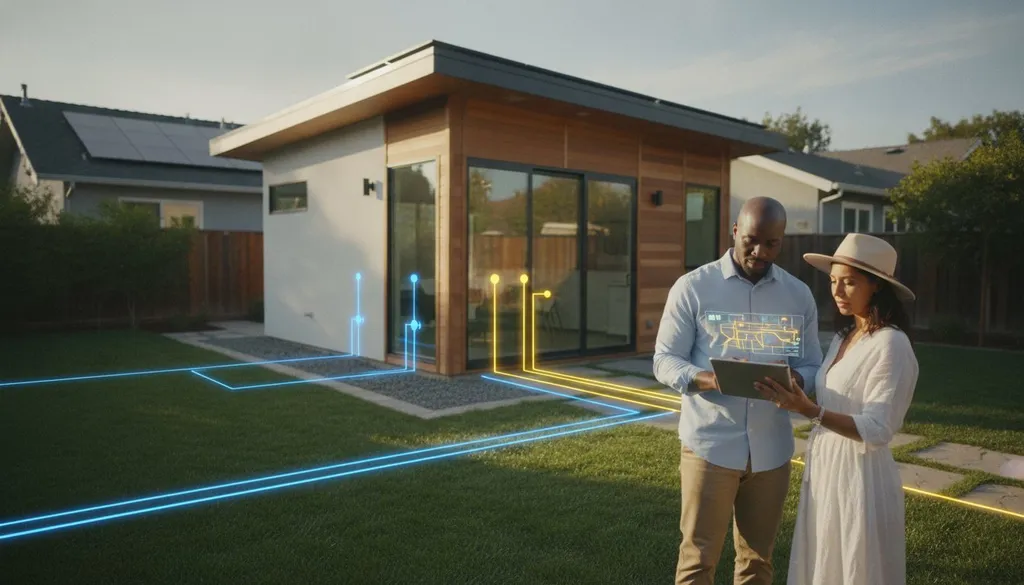
Building in a backyard requires surgical precision. Unlike standard home additions, ADU construction requires independent sewer lateral connections and often entirely new water lines to meet modern code. If your builder misses the need for an electrical panel upgrade or fails to account for sewer depth, you could face tens of thousands in unbudgeted costs mid-construction. ADU plumbing is more complex than a standard home addition because it requires establishing new, independent connections for waste and water within a separate building envelope.
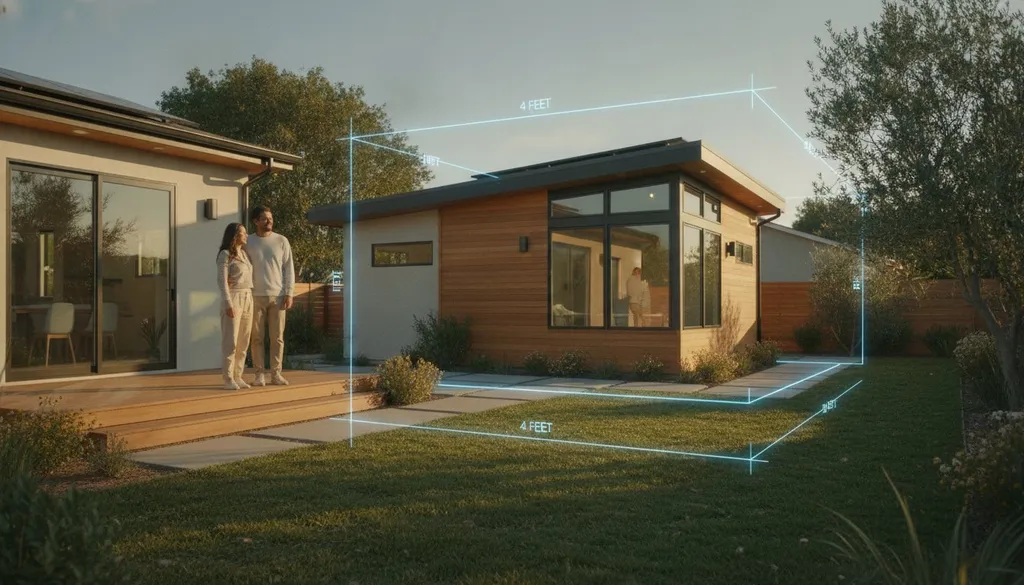
Precision is equally vital for property lines. California state law mandates specific 4-foot side and rear setbacks for most units. A single foot of error can result in a total permit rejection or a mandatory teardown of the frame. Developing a robust hiring an adu builder checklist helps you avoid teams that lack this specific experience with tight-clearance construction.
Navigating Local Zoning vs. State Law
The legal landscape for 2026 is governed by complex statutes like SB 9 and SB 10. While state law provides a broad right to build, individual cities still enforce "objective standards" regarding roof height, exterior materials, and landscaping. A general contractor might promise a design that complies with state mandates but fails to meet city-specific requirements. This is why we recommend using a Local ADU Rule Checker before finalizing any plans or signing a contract.
Even "pre-approved" plans from a city catalog aren't a silver bullet. They don't account for your specific soil conditions, utility locations, or existing easements. An ADU specialist knows that site-prep is the foundation of a successful project. They focus on the logistical hurdles of your specific lot to ensure your unit passes inspection the first time.
The Essential Credentials Checklist: Verifying the Basics
Verifying credentials is your first line of defense against construction fraud and subpar workmanship. Every hiring an adu builder checklist must begin with the "Big Three": a valid California State License Board (CSLB) license, Workers’ Compensation, and General Liability insurance. In California, a "B" General Building License is the mandatory minimum for ADU construction because the project involves multiple trades. Don't take a contractor’s word for it. Visit the CSLB portal and enter their license number to confirm it is active and in good standing. Look specifically for a history of suspensions or frequent company name changes, which can indicate a builder trying to outrun a poor reputation or legal trouble.
Beyond just having a license, builders must maintain an active bond. This $25,000 bond provides a small pool of funds for consumers if a builder fails to follow state laws. However, for a project costing several hundred thousand dollars, this bond alone is insufficient protection. Resources like the AARP ADU Guide (opens in a new tab) emphasize that homeowners must look deeper into the builder’s professional history to ensure they are equipped for the unique legal hurdles of secondary suites. If you want to skip the manual verification, our Contractor Matching Service (opens in a new tab) only includes pros who have already passed these rigorous background checks.
Insurance Coverage Limits for Backyard Projects
Standard liability insurance often defaults to $1 million. While that sounds like a significant amount, it is often inadequate for ADU projects. Because these units are built in close proximity to your primary residence, a single accident, like a fire or structural collapse, could damage both buildings simultaneously. Verify that your builder carries at least $2 million in general liability and that their policy specifically covers "new residential construction." Without Workers’ Comp, you are personally liable if a subcontractor is injured on your property.
The Importance of a Performance Bond
A project-specific performance bond is different from the standard license bond. It guarantees that the project will be completed according to the contract. If the builder goes out of business mid-way through, the bonding company provides the funds to finish the work. Always ask for a "Certificate of Insurance" that names you as the "additionally insured." This document proves the policy is active and ensures the insurance company will notify you directly if the coverage lapses. Including these verification steps in your hiring an adu builder checklist ensures you are protected from the moment the first shovel hits the ground.
Design-Build vs. Traditional: Choosing the Right Hiring Model
Choosing the right project delivery method is a pivotal step in your hiring an adu builder checklist. In California, you generally face two paths: the Design-Build model or the Traditional "Design-Bid-Build" approach. Each has distinct implications for your budget, timeline, and daily involvement. Your choice should align with how much control you want over the design versus how much simplicity you need during the construction phase.
The Design-Build model provides a single contract for both architectural design and construction. This creates one point of responsibility. If a structural issue arises during framing, the builder cannot blame the architect because they are on the same team. This model has become increasingly popular in 2026 as homeowners seek to navigate the streamlined but technical requirements of AB 462 and other recent legislation. Conversely, the Traditional model involves hiring an independent architect to create your plans first. Once the design is finalized, you send those plans out to multiple general contractors for bidding. This path allows for maximum design control but requires you to act as the primary mediator between two different businesses.
The Efficiency of the Design-Build Approach
Design-build firms are built for speed. Because the designers and builders work in the same office, they often develop deep, repetitive relationships with city permit technicians. This localized knowledge is crucial for meeting 2026 standards for coastal development permits, which now require concurrent processing. This model is ideal for homeowners who want a turnkey experience. It significantly reduces "change orders," which are price increases that occur when a builder discovers the architect's plans aren't feasible on-site. By integrating the two phases, the builder assumes the risk of the design's buildability from day one.
The Traditional Model: Maximum Control
The traditional model remains a strong choice for highly custom projects or challenging California terrain, such as steep hillside lots. Independent architects can prioritize your aesthetic vision without the immediate constraints of a builder's standard material inventory. However, this model presents the challenge of "bid parity." When you receive three different quotes, you must ensure each contractor is bidding on the exact same specifications, materials, and utility plans. It requires a higher personal bandwidth and more construction literacy to manage effectively. Choose this path if you have complex architectural needs or previous experience managing residential projects.
The ADU Builder Interview: 10 Questions to Ask
The interview phase is where you move from verifying paperwork to assessing a builder's actual operational competence. While a hiring an adu builder checklist helps you filter out unqualified candidates, the face-to-face conversation reveals how they handle the friction of a real construction site. You need a partner who understands the granular details of backyard development, not just someone who can follow a set of blueprints. Start your interview by focusing on these five critical areas of expertise.
- "How many ADUs have you completed in \[Your City\] in the last 24 months?" Local experience is non-negotiable. Every city has unique "objective standards" and utility requirements that can stall a project if the builder is learning on your dime.
- "Who handles the permit submittal and correction process with the city?" You want a builder who takes full responsibility for the "back-and-forth" with planners. If they expect you to run to city hall, they aren't the right specialist.
- "Can you provide a line-itemized budget or just a flat-fee estimate?" Avoid "lump sum" quotes. A professional builder provides a detailed breakdown of costs for everything from foundation work to finish carpentry.
- "What is your current crew capacity and expected start date?" Many delays happen because a builder is "over-sold." Confirm they have a dedicated team ready to begin within a reasonable timeframe.
- "How do you handle utility connections for backyard units?" As established earlier, sewer and power tie-ins are budget killers. Ask for their specific plan for your lot's topography and existing lines.
If you want to skip the stress of manual interviewing, use our Contractor Matching Service (opens in a new tab) to connect with pros who have already been vetted for these exact criteria.
Evaluating Their Project Management Style
Modern ADU construction moves too fast for paper-and-pencil management. Ask your builder what software they use for project updates and schedule tracking. Platforms like Buildertrend or CoConstruct allow you to see daily logs, photos, and budget adjustments in real-time. A contractor who relies on verbal updates or messy clipboards is a major risk in 2026. Consistent digital communication ensures that everyone is on the same page regarding change orders and inspection milestones. Ask how often you will have formal on-site meetings to review progress together.
Checking Local References Correctly
Don't just call past clients for a testimonial. Ask the builder if you can visit a project currently under construction. This allows you to see the cleanliness of the job site and the quality of the framing before it is hidden by drywall. When speaking to past clients, ask specifically if the final price stayed within 5% of the original bid. You should also use the "Permit History" trick. Most California cities have online portals where you can search by contractor name to see their active and closed permits. This verifies that they are actually finishing the projects they start and passing final inspections without major delays.
Streamlining Your Search with ADUDesk’s Vetted Network
Executing a manual hiring an adu builder checklist is a vital safeguard, but it is also a significant time investment. Vetting dozens of contractors, verifying insurance certificates, and cross-referencing past permit history can take weeks of effort. ADUDesk simplifies this journey by acting as your professional pre-vetting shortcut. We do the heavy lifting of the vetting process before you ever receive a project quote. By using our platform, you move directly from uncertainty to a shortlist of qualified experts who are ready to build.
Our process begins with data-driven insights. Before you speak to a builder, our ADU Cost Calculator provides a realistic budget range based on current 2026 California construction costs. This prevents the common pitfall of accepting a low-ball bid that leads to mid-project price hikes. Once you have a baseline budget, our Local Rule Checker verifies the feasibility of your project against city-specific "objective standards." This ensures that the proposals you receive from builders are actually legal and permit-ready under the latest state mandates.
The ADUDesk "Vetted" Standard
We apply a rigorous internal vetting protocol to every contractor in our network. This goes beyond checking for a basic CSLB license; we analyze a builder's local success rate and their specific experience with different ADU types. Our Contractor Matching Service doesn't just give you a list of names. We match you based on the technical requirements of your project. A specialist who excels at garage conversions in Los Angeles might not be the right fit for a complex detached unit on a hillside in San Diego. We ensure the pro you hire has a proven track record for your specific build type and local jurisdiction.
Find your vetted ADU builder match today (opens in a new tab)
From Hiring to Final Inspection
The role of a project partner shouldn't end once the contract is signed. Our platform supports you through the "Post-Hiring" phase to ensure your builder stays on track and your budget remains intact. You can access our ADU Project Planner to monitor milestones and keep communication organized. For homeowners in major hubs, our City-Specific ADU Guides for San Francisco, Los Angeles, and San Diego provide granular details on local inspection quirks and utility requirements. This comprehensive support system ensures that your hiring an adu builder checklist leads to a finished home, not just a signed contract.
Start your project feasibility check now (opens in a new tab)
Secure Your Project’s Success Before Breaking Ground
Building a secondary residence is a significant financial and emotional investment. By applying a rigorous hiring an adu builder checklist, you protect yourself from the common pitfalls of California construction. Success relies on choosing a partner who understands the difference between a standard addition and a complex, site-specific ADU. They must possess the technical knowledge to navigate utility requirements and local zoning standards without costly trial and error.
ADUDesk simplifies this journey by providing access to a vetted California contractor network already trusted by homeowners in LA, San Diego, and the Bay Area. Instead of manually verifying licenses and past permit histories, you can leverage our real-time local zoning rule checker and matching tools to find a pro who is truly qualified for your specific lot. This methodical approach removes the guesswork and ensures your project starts on a foundation of transparency and expertise.
Match with vetted ADU builders in your city (opens in a new tab) to move from the planning phase to a successful final inspection with total confidence. Your backyard transformation is within reach when you have the right expertise on your side.
Frequently Asked Questions
Do I need a separate license for an ADU builder in California?
No separate license category exists specifically for ADUs in California. A contractor must hold a valid Class B General Building license from the CSLB to legally oversee the multi-trade construction required for these units. While specialized certifications don't exist, you should verify their specific project history through a hiring an adu builder checklist to ensure they understand current 2026 state mandates and local utility requirements.
How do I know if an ADU builder is overpriced?
You can identify an overpriced bid by comparing it against current 2026 market averages for your specific region. In California, detached ADU costs typically range from $300 to over $550 per square foot depending on finishes and site complexity. Use a data-driven cost calculator to establish a baseline before soliciting bids. If a quote is significantly higher without a clear explanation for site-specific challenges, it's likely inflated.
Can I act as my own owner-builder for an ADU?
You can legally act as an owner-builder for an ADU in California, but this path carries significant financial and legal risks. In this scenario, you assume full responsibility for all permits, site safety, and insurance for subcontractors. Most homeowners find that the complexity of utility tie-ins and strict 2026 zoning laws makes hiring a professional specialist a safer and more efficient choice for protecting property value.
What is the most common mistake when hiring an ADU contractor?
The most common mistake is hiring a general contractor who lacks specific experience with backyard micro-home infrastructure. Many builders understand standard framing but struggle with the precision required for 4-foot setbacks or the technical demands of independent sewer laterals. Including a verification of city-specific permit success in your hiring an adu builder checklist helps you avoid teams that might cause project-stopping rejections during the inspection phase.
Should I hire a builder before or after I have plans?
Your hiring timeline depends on whether you prefer the design-build or traditional model. Hiring a design-build firm early allows you to align your architectural vision with a realistic construction budget from the start. If you choose a traditional model, you'll need completed architectural plans before you can receive accurate, comparable bids from general contractors. Early builder involvement often prevents over-designing a unit that exceeds your financial capacity.
How long should the hiring and design phase take in 2026?
The hiring and design phase in 2026 typically takes between three to six months. This timeline accounts for initial feasibility checks, architectural drafting, and the inevitable back-and-forth during the city permit submittal process. While state laws like AB 462 aim to streamline coastal permits, local municipal backlogs still vary. Starting your search early ensures you have enough time to vet builders without feeling rushed into a contract.
Is a "pre-approved" ADU plan always the fastest way to build?
Pre-approved ADU plans aren't always the fastest route to completion. While they can shave weeks off the initial design phase, they don't account for the custom site-prep, foundation engineering, or utility connections required for your specific lot. A builder must still adapt these plans to your property's topography and existing infrastructure. Often, a custom design tailored to your yard's exact dimensions results in fewer field corrections and a smoother inspection process.