
What if the decision to install fire sprinklers in your new ADU had nothing to do with the size of the unit, but everything to do with the house you already live in? For many California homeowners, the difference between a streamlined permit and a multi-thousand dollar plumbing surprise comes down to a single, often misunderstood regulation. It's frustrating to feel like the goalposts keep moving while you're just trying to add value to your property. You want clear answers, not a dense stack of building codes that seem to contradict each other. Whether you're worried about water pressure issues or the cost of a dedicated fire line, that anxiety is completely valid.
This guide simplifies the adu fire sprinkler requirements california mandates for 2026 so you can move forward with confidence. We'll provide a definitive path to determine if your specific lot requires sprinklers, explain the technical system options available, and outline how to vet contractors who actually know the local rules. By the end of this article, you'll have a clear roadmap to protect both your family and your construction budget.
Understanding California ADU Fire Sprinkler Laws: The Golden Rule
One of the most significant barriers to building a backyard home is the fear of safety-related cost overruns. To manage your budget effectively, you must first grasp the "Golden Rule" of California's building code. Simply put, an ADU does not require fire sprinklers if the primary residence on the property is not already equipped with them. This exemption applies whether you are building a detached cottage in the garden or converting an existing attached garage into a living space. The Primary Residence Rule serves as the baseline for all 2026 ADU fire safety permits, stating that fire sprinklers are only required in an ADU if they are also required for the primary residence.
This regulation provides a massive financial relief for homeowners. By eliminating the need for a dedicated fire line and complex interior plumbing in many cases, the state has cleared a path for more affordable housing. However, determining your specific adu fire sprinkler requirements california status requires looking at two specific factors: the age of your main home and the specific legislative protections currently in place.
The 2011 Cutoff: Why Your Main House Age Matters
The year 2011 changed everything for California residential construction. On January 1, 2011, the state mandated that all new one-and-two-family dwellings must include automatic fire sprinkler systems. If your primary residence was permitted and built after this date, it almost certainly has sprinklers. Consequently, any ADU you build on that lot will also require them to maintain a consistent safety standard across the property.
For homes built before 2011, the situation is usually different. Most older homes rely on traditional fire safety measures rather than active sprinklers. You can verify your home’s status by checking city records or looking for a "Certificate of Occupancy" in your property's history. If no system exists in the main house, you are generally protected from being forced to install one in your ADU. Check your local building department records to confirm your home's original permit date before you finalize your design plans.
Senate Bill 1069 and the Homeowner’s Protection
The legislative foundation for these exemptions started with Senate Bill 1069. Lawmakers recognized that the high cost of fire protection infrastructure was preventing homeowners from participating in the housing solution. SB 1069 specifically removed the "sprinkler burden" for most ADU projects to encourage the development of affordable backyard homes. This wasn't just a minor tweak; it was a fundamental shift in how the state views accessory dwellings.
While state law provides this protective framework, it is vital to remember that local jurisdictions must comply with these standards. Some cities previously tried to enforce stricter rules, but current state mandates have largely standardized these requirements. To see how these state laws are applied in your specific neighborhood, you can consult the ADUDesk Local Rule Checker (opens in a new tab). This tool helps you identify any city-specific fire amendments that might influence your project's technical requirements.
4 Scenarios Where Fire Sprinklers Are Mandatory for Your ADU
While the "Golden Rule" protects many homeowners, specific property conditions can override that exemption. Understanding these triggers early helps you avoid a mid-construction permit revision that could cost thousands. Most adu fire sprinkler requirements california mandates fall into one of four specific categories that fire marshals look for during plan checks.
- Scenario 1: Existing Systems. If your primary residence already has an automatic fire sprinkler system installed, your ADU must have one too. This ensures consistent safety coverage across the entire lot.
- Scenario 2: Multi-Unit Properties. Properties classified as R-2 occupancy, such as apartment buildings or large multi-family complexes, generally require sprinklers regardless of the primary unit's status.
- Scenario 3: Major Remodels. If your ADU project is part of a larger renovation of the main house that exceeds a certain valuation or square footage, the city may trigger a whole-house fire safety retrofit.
- Scenario 4: Bonus Density Programs. Some cities offer "Bonus ADU" incentives that allow for extra units or reduced setbacks. These programs often require higher safety standards, including sprinklers, in exchange for the extra density.
The Occupancy Trap: R-3 vs. R-2 Classification
Occupancy classification is a technical detail that frequently trips up owners of duplexes. Most single-family homes are R-3. However, multi-family buildings with three or more units are R-2. If you add an ADU to an existing duplex, the property effectively becomes a three-unit building. This shift in classification often triggers mandatory sprinkler requirements for the new unit and potentially the existing ones. To navigate this technical hurdle, it is wise to consult with a vetted ADU contractor (opens in a new tab) who understands how occupancy shifts impact your budget.
Attached ADUs vs. Detached ADUs: Does It Change the Rule?
The physical connection to your main house matters. Attached ADUs must meet strict fire-separation requirements to prevent a blaze from spreading between dwellings. If you're converting an existing garage into an attached ADU, the fire marshal may view it differently than a "new addition" built from the ground up. In many cases, a fire-rated assembly is often the strategic alternative to full sprinkler installation in attached units. This involves using specific types of drywall and fire-caulking to create a safety barrier. If you're unsure which scenario applies to your lot, you can connect with a local expert (opens in a new tab) to review your site plan before you submit it to the city.
Comparing NFPA 13D vs. NFPA 13R Sprinkler Systems
If you determine that your project must meet adu fire sprinkler requirements california mandates, the next step is choosing the right technical standard. Most backyard homes fall under the NFPA 13D standard, which is specifically designed for one
The choice between these standards dictates your hydraulic calculations and pipe sizing. An NFPA 13R system generally requires more sprinkler heads to activate at once and includes protection for areas like attics or crawl spaces that 13D often ignores. Because 13R systems demand higher water volume and pressure, they often necessitate larger water meters and more robust infrastructure. Understanding these differences early prevents you from designing a system that your local water utility can't actually support.
Technical Specs of the NFPA 13D System
The NFPA 13D system is the most homeowner-friendly option due to its streamlined requirements. Its primary technical hurdle is the "two-head flow" rule. This requires your water supply to support the two most hydraulically demanding sprinkler heads simultaneously for a set duration, usually 7 to 10 minutes. For most ADUs, installers use CPVC piping, which is a specialized orange plastic that's more cost-effective and easier to route than traditional copper.
You also have a choice between "standalone" and "multipurpose" systems. A standalone system uses dedicated pipes only for fire protection, while a multipurpose system integrates the fire sprinklers with your domestic cold-water plumbing. Multipurpose systems are often preferred for ADUs because every time you flush a toilet or run a tap, you're circulating water through the fire lines, preventing the water from becoming stagnant or bacterial.
Hydraulic Calculations and Permit Drawings
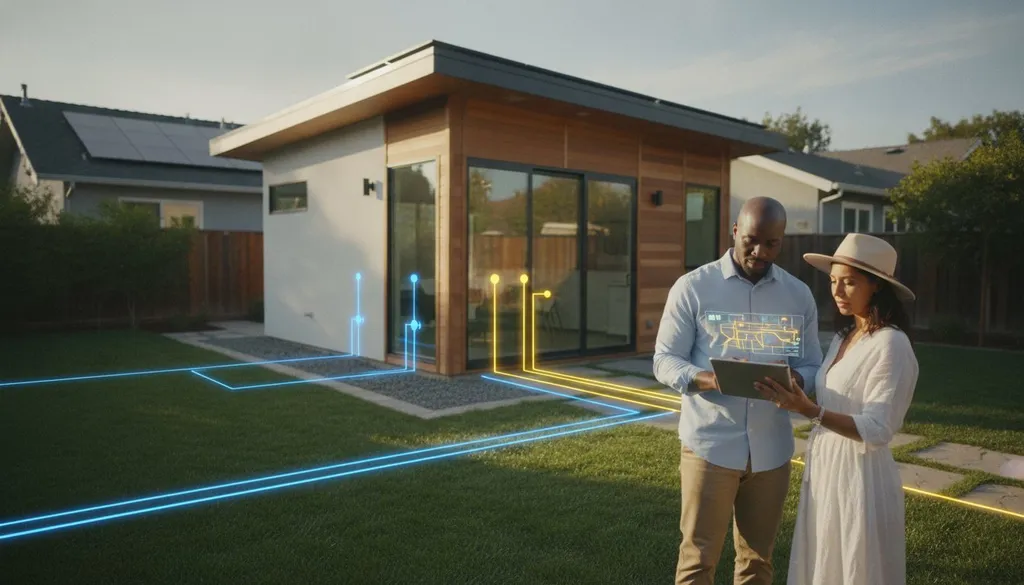
You cannot simply draw sprinkler locations on a napkin and submit them to the city. These systems require precise hydraulic calculations performed by a specialized fire protection engineer (FPE). The engineer must account for friction loss in the pipes, the elevation of the ADU, and the available water pressure from the street. This process starts with a "Water Flow Test" to measure the static and residual pressure at the nearest hydrant. If the test reveals low pressure, you might need to add a booster pump or a storage tank to your project. Use the ADU Project Planning Tool (opens in a new tab) to track these engineering milestones and ensure your fire safety designs are ready before you break ground.
The Hidden Costs: Water Meters, Pressure, and Infrastructure
Installing the actual sprinkler heads inside your ADU is often the most affordable part of the project. The real financial impact comes from the infrastructure required to support those heads. As you evaluate adu fire sprinkler requirements california, you must look at the water volume your property can handle. Most older homes utilize a 5/8" or 3/4" water meter. While this is plenty for a standard household, it rarely provides the flow rate necessary to trigger a fire suppression system. Upgrading to a 1" meter is a common requirement, but the costs don't stop at the meter box.
If your existing service line from the street is too narrow, you may face a "lateral upgrade." This involves digging up the public street to install a larger pipe connecting the city main to your property. This single requirement can add thousands to your budget before a single piece of drywall is hung. Additionally, most jurisdictions require a backflow preventer to ensure sprinkler water doesn't contaminate your drinking supply. These devices require professional installation and annual testing by a certified technician; this adds a recurring maintenance cost to your property ownership.
Several design factors also drive up expenses. High vaulted ceilings require more water volume to suppress a fire, which might necessitate larger internal piping. If your ADU is located at the far back of a deep lot, friction loss in the long pipe run will sap your water pressure. If your street already has low pressure, you may even need a dedicated booster pump and storage tank. To avoid these surprises, find a contractor (opens in a new tab) who can perform a site-specific infrastructure audit early in the planning phase.
The Water Meter Upgrade Checklist
Do not wait for the city inspector to tell you your meter is too small. Follow these steps to verify your capacity during the design phase:
- Step 1: Locate your current water meter. The size is usually stamped directly on the metal dial or the plastic faceplate.
- Step 2: Request a "Fire Flow Test" from your local utility, such as LADWP or San Diego Public Utilities. This report tells you exactly how much pressure is available at your nearest hydrant.
- Step 3: Have your plumber calculate the "Fixture Unit" count. This totals the demand from every sink, toilet, and shower in both the main house and the new ADU.
Passive Fire Protection Alternatives
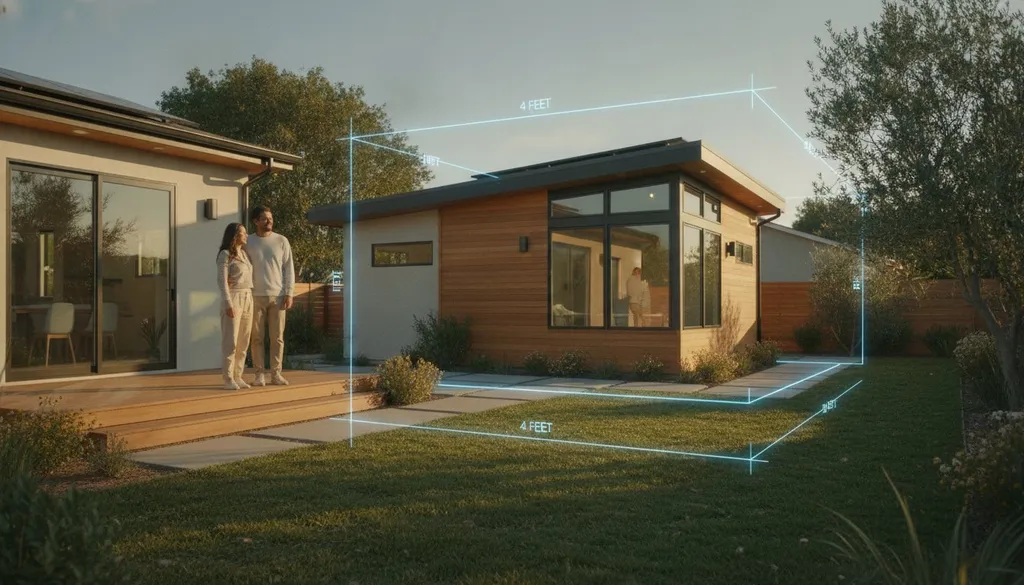
In some specific cases, you can use passive fire protection to meet safety standards without installing active sprinklers. For attached ADUs or conversions, using 1-hour fire-rated drywall (Type X) on shared walls can create a sufficient safety barrier. Property setbacks also play a role; the standard 4-foot rule is designed to provide fire department access and prevent fire spread between buildings. By utilizing fire-resistive materials and adhering to strict placement rules, you might satisfy local health and safety codes while keeping your infrastructure costs manageable.
How to Verify Local ADU Fire Rules in Your City
While state law sets the floor for adu fire sprinkler requirements california, your local fire department remains the final gatekeeper. They focus on two critical variables: access and water supply. If your municipality has specific amendments to the state building code, those rules take precedence during the plan check phase. You can use the ADUDesk Local Rule Checker (opens in a new tab) to see how your specific city interprets these safety mandates before you finalize your budget.
One major hurdle often overlooked is the "Fire Department Access" rule. Even if your main house is exempt from sprinklers, a fire marshal may require them if the ADU is located more than 150 feet from the public curb. This is known as the hose pull distance. If your backyard is deep or the access path is narrow, standard fire hoses cannot reach the unit effectively. In these scenarios, sprinklers become a non-negotiable safety tool to protect the structure and its occupants.
During your preliminary review with the city building department, bring a site plan and ask these specific questions:
- Is this property located within a High Fire Hazard Severity Zone?
- Does the fire department require a 150-foot hose pull measurement for my specific ADU placement?
- Are there any local fire flow requirements that exceed the standard NFPA 13D calculation?
- Will the city require a dedicated fire service line or can I use a multipurpose system?
Specifics for Los Angeles, San Diego, and San Jose
Regional nuances are common across the state. For instance, Los Angeles ADU requirements (opens in a new tab) are significantly stricter for properties located in High Fire Hazard Severity Zones (HFHSZ). In these brush-heavy areas, wildfire risk often overrides standard exemptions. Similarly, San Diego’s technical bulletins (opens in a new tab) provide granular guidance on how to calculate water flow for backyard units. If you are looking at San Jose’s pre-approved plans (opens in a new tab), remember that many of these designs have fire safety assumptions built-in, but you must still verify that your specific lot's water pressure can support the design.
Matching with a Fire-Literate ADU Contractor
Permitting a project involves more than just design; it requires a builder who understands the nuances of the 2026 building code. You should never hire a contractor who "guesses" about fire safety or assumes a generic exemption applies to every lot. A mistake here can lead to a red-tagged project or expensive retrofits after the walls are closed. ADUDesk’s matching service filters for professionals who are literate in NFPA 13D and local California amendments. This ensures your project partner acts as a regulatory shield, protecting your budget from unexpected infrastructure costs. Verify your lot’s fire requirements and find a vetted builder today. (opens in a new tab)
Building Your ADU with Regulatory Confidence
Building a backyard home is a major investment, and mastering the adu fire sprinkler requirements california mandates is the best way to protect your budget. You now know that while the Golden Rule often provides an exemption, factors like your home’s age, occupancy classification, and fire department access can change technical requirements instantly. Avoiding the water meter trap by performing early flow tests ensures you won't face five-figure surprises during the permitting phase.
Clear information is your best tool for a successful build. By leveraging real-time local zoning data and 2026 California Building Code compliant guides, you can move from uncertainty to action. Our vetted contractor matching service connects you with professionals who understand these nuances deeply. This specialized expertise acts as your regulatory shield throughout the construction journey.
Check your local ADU fire sprinkler requirements and find a vetted builder today (opens in a new tab) to ensure your project stays on track. You've done the research; now it's time to build your future with a partner who knows the rules inside out.
Frequently Asked Questions
Do I need fire sprinklers for a garage conversion ADU in California?
You don't need fire sprinklers for a garage conversion if your primary residence doesn't have an automatic fire sprinkler system. This exemption is part of the state's effort to reduce construction costs for homeowners. However, if your garage is attached and the project involves a major remodel of the main house, you should verify local amendments. Always check your specific lot conditions to confirm you meet all current safety standards.
How much does it cost to install fire sprinklers in an ADU?
The cost to install fire sprinklers varies significantly based on your property's existing infrastructure. While the interior piping and heads are standard components, the primary expenses often stem from water meter upgrades or digging new service laterals to the street. Factors like ceiling height and distance from the water main also influence the final budget. It's best to get a detailed site audit from a professional to understand the specific cost drivers for your lot.
Can my local city override the state exemption for ADU sprinklers?
Local jurisdictions cannot strictly override the state's adu fire sprinkler requirements california provides, but they do have the final authority over fire department access and water supply. If your local fire marshal determines that your ADU is in a high-risk zone or doesn't have adequate hose access, they can mandate sprinklers regardless of the state's general exemption. These local amendments are why consulting a rule checker for your city is vital.
What is the "150-foot rule" for fire department access?
The "150-foot rule" refers to the maximum distance a fire hose can be pulled from the public curb to reach all points of the ADU structure. If your ADU is situated deep in a backyard and exceeds this distance, the fire department may require sprinklers to ensure the building is protected. This rule applies even if your primary house is exempt from sprinkler mandates. Measuring this distance accurately during the design phase prevents expensive permitting delays later.
Does a JADU (Junior ADU) require fire sprinklers?
A Junior ADU (JADU) rarely requires fire sprinklers unless the primary residence already has them. Since JADUs are created within the existing walls of a single-family home and are limited to 500 square feet, they typically fall under the same fire safety classification as the main house. However, you must ensure the JADU has proper fire-rated separation walls and independent exits to meet standard California building codes without triggering a full sprinkler requirement.
Will I need a separate water meter for my ADU if I install sprinklers?
You aren't usually required to install a separate water meter for an ADU, but you will likely need to upgrade your existing meter to a larger size. Most fire sprinkler systems require a 1" meter to provide enough flow and pressure for the heads to function effectively. Using a single, larger meter for both the main house and the ADU is often more cost-effective than installing a completely independent second service line from the city main.
Are fire sprinklers required for ADUs in High Fire Hazard Severity Zones?
Fire sprinklers are frequently required for ADUs located in High Fire Hazard Severity Zones (HFHSZ), even if the main house doesn't have them. In these areas, local fire departments prioritize structural resilience against wildfires. The adu fire sprinkler requirements california mandates for these zones often include stricter building standards involving fire-resistive materials and active suppression systems. You should consult your local fire hazard map to see if your property falls within these boundaries.
What happens if I build my ADU without required sprinklers?
If you build an ADU without required sprinklers, you face significant legal and financial consequences. The building department will likely "red tag" your project, halting construction until you comply with the code. This often leads to expensive retrofits, as you may need to tear out finished drywall to install piping. You also won't receive a final Certificate of Occupancy. This makes the unit illegal to rent and potentially complicates future property sales or insurance claims.