
That separate utility meter you think will simplify your rental management might actually be a $9,000 mistake. It's common to feel a sense of dread when a contractor mentions main panel upgrades or trenching requirements without explaining the logic behind the price tag. You want a predictable project, but adu utility connection costs often feel like a moving target. We understand that the technical side of California's Title 24 and utility provider mandates can be intimidating when you're just trying to add value to your property.
This guide empowers you to master these complexities through a practical, expert-led breakdown. You'll learn to navigate the specific hurdles set by providers like PG&E, SCE, and SDG&E with confidence. We'll explore the three main connection methods and provide a clear framework for estimating trenching costs based on distance. By the end, you'll know exactly how to avoid hidden fees and determine if a separate meter is a smart investment or a financial drain for your specific property.
Understanding ADU Utility Connections: More Than Just a Hookup
Utility connections are often the most unpredictable soft costs in a project. While permit fees follow a set schedule, adu utility connection costs fluctuate based on the specific physical layout of your property. A connection isn't just a simple plug; it's a technical integration of the "Big Three": electrical, water/sewer, and gas. You must determine if your existing main house has the surplus capacity to support a second unit. If your current electrical panel is only 100 amps, adding a modern ADU will likely trigger a full service upgrade. This tie-in happens early in the construction timeline, usually right after grading, but the strategy must be locked in during the design phase to avoid expensive mid-project corrections.
The Three Pillars of ADU Infrastructure
Modern ADUs must meet strict Title 24 energy standards. For electrical systems, this often means moving to a 200-amp standard for the entire property to handle the increased load of HVAC systems and appliances. Plumbing is equally complex. You'll need to decide between tying into the existing house sewer lateral or installing a new connection to the street main. While natural gas was once the standard, many cities like San Jose (opens in a new tab) and Sacramento (opens in a new tab) are moving toward all-electric requirements for new detached units. This shift simplifies the infrastructure but requires careful planning for electrical load capacity from the start.
Why Distance is Your Biggest Cost Driver
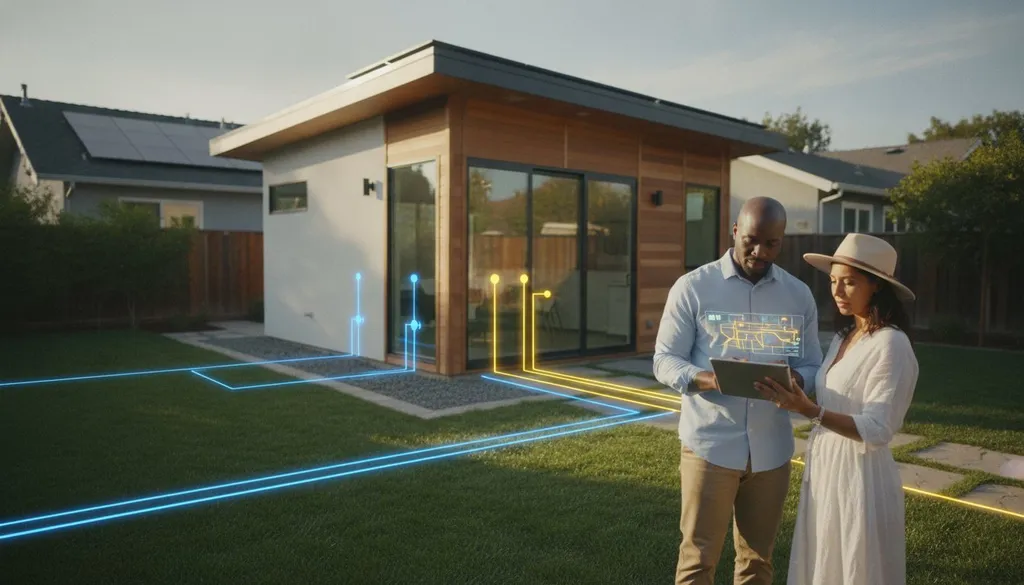
The physical distance between your primary home and the ADU is the primary driver of labor and material expenses. Trenching costs typically range from $35 to $85 per linear foot in California. If your ADU is tucked in the far corner of a deep lot, those feet add up quickly. We recommend a "line of sight" path that minimizes turns and avoids major obstacles to keep your budget under control. Digging a combined trench for all utilities can be 40-60% cheaper than digging separate lines, so coordination is essential.
Existing hardscaping complicates this further. Cutting through a concrete driveway or a mature brick patio requires specialized equipment and restoration labor that can double your excavation budget. If your lot has significant slopes, you may also face the "gravity problem" where sewer lines require pumps or deeper, more expensive trenching to reach the main line. Assessing these physical barriers early allows you to build a realistic contingency into your adu utility connection costs before you break ground.
Electrical Capacity and Main Panel Upgrades
Many California homes built before 1990 operate on a 100-amp electrical service. While this was sufficient for a single-family dwelling, it's rarely enough to support a second living unit. Adding an ADU increases your property’s total electrical load. You must determine if your existing infrastructure can handle the demand of two kitchens, two HVAC systems, and the lighting required by Title 24. If your panel is at capacity, you'll need a Main Panel Upgrade (MPU). This is a critical component of adu utility connection costs that homeowners often overlook until the inspection phase.
Provider rules vary significantly across the state. PG&E, for instance, has specific transformer capacity rules that might require a service drop modification if the local grid can't handle your ADU’s power draw. In contrast, Southern California Edison (SCE) may have different requirements for meter placement and clearance. All-electric mandates in many jurisdictions further complicate this strategy. Without gas, your ADU relies entirely on high-draw appliances like heat pump water heaters and induction cooktops. This shift makes a 200-amp panel the practical standard for any property looking to remain future-proof.
When is a Main Panel Upgrade (MPU) Necessary?
A load calculation is the only way to verify if an upgrade is mandatory. Your electrician will sum the amperage of all existing circuits and add the projected load of the new unit. If the total exceeds 80% of your current panel's rating, an upgrade is essential. Beyond capacity, 2026 fire codes often require relocating older meters to ensure clear access for emergency personnel. This relocation involves more than just a new box; it requires new conduit and potentially digging into your yard, which adds to the overall ADU utility connection costs (opens in a new tab).
Solar Integration and Utility Connections
California’s Title 24 requires most new detached ADUs to include a solar energy system. This solar array must tie back into your main electrical service or a dedicated meter. It's vital to coordinate this connection with your utility provider early. Your meter must be "solar-ready" to track the energy you send back to the grid. If you're building in Southern California, you should check local solar rules in Los Angeles (opens in a new tab) to understand how LADWP or SCE handles net-metering for multi-unit properties. To ensure your electrical plan meets these evolving standards, you can find contractors (opens in a new tab) who specialize in ADU-specific electrical infrastructure.
Metering Strategies: Shared vs. Separate Connections
Deciding how to measure your ADU’s energy and water consumption is a pivotal financial choice. While earlier sections focused on the physical requirements of trenching and panel upgrades, your metering strategy dictates your long-term relationship with tenants and your immediate exposure to municipal fees. You must choose between a shared meter, which pulls from the primary home’s service, or a separate meter that operates as an independent account with the utility provider. This decision significantly influences your total adu utility connection costs, as separate meters often trigger administrative fees that shared systems avoid.
California state law (Government Code Section 65852.2) generally prohibits local agencies from requiring a separate utility connection for an ADU unless the unit is being constructed concurrently with a new single-family home. This gives most homeowners the flexibility to choose the most cost-effective path. Before finalizing your plans, review the utility connection fee policies for your specific city, as capacity charges can vary wildly between jurisdictions like San Jose (opens in a new tab) and Los Angeles (opens in a new tab).
Shared Utilities and Sub-metering
The shared meter approach is the most common path for homeowners looking to minimize upfront capital. By tapping into the existing house sewer and water lines, you avoid the high price of new street-level connections. To manage tenant billing fairly, you can install private sub-meters. These devices track the ADU’s specific usage without involving the utility company. It's a practical way to bill tenants for their actual consumption. Keep in mind that California law requires landlords to provide a clear written disclosure of how these shared utility costs are calculated and distributed.
The High Cost of Independence: New Utility Drops
Installing a separate meter provides total administrative independence, but it comes with a steep price tag. Utility providers like PG&E or LADWP charge "drop fees" to run a new service line from the street to your property. Beyond the hardware, a separate water meter can trigger substantial development impact fees. In some regions, a new, dedicated water meter can cost between $5,800 and $9,000 in provider fees alone. You should consider a separate meter only if:
- You plan to sell the ADU as a condo (where local ordinances allow).
- The primary residence’s current service is physically incapable of supporting the additional load.
- You want to avoid any potential legal friction regarding utility billing with a long-term tenant.
A separate meter also requires the city to assign a unique address to the ADU. This administrative hurdle must be cleared early in the project to ensure your adu utility connection costs don't balloon due to late-stage plan revisions.
The Logistics of Trenching and Plumbing Tie-ins
Trenching is where your abstract site plans meet the hard reality of your soil and landscape. While previous sections detailed the strategic choices of metering and capacity, the physical act of digging drives a significant portion of labor-related adu utility connection costs. California building codes dictate strict depth and safety requirements to protect these lines. Typically, electrical conduit requires a depth of 18 to 24 inches, while gas and water lines may sit at 12 to 18 inches depending on local soil conditions and pipe material. You must ensure your contractor provides proper bedding, usually sand, to prevent rocks from damaging the pipes over time as the ground shifts.
The "Gravity Problem" is a technical hurdle that often surprises homeowners on sloped lots. Water and gas are pressurized, meaning they can travel uphill to reach your ADU without issue. Sewer systems, however, rely entirely on a consistent downward slope, typically a quarter-inch of drop for every foot of horizontal run. If your ADU sits at a lower elevation than the primary residence's sewer lateral, you cannot rely on a standard passive connection. You must install an ejector pump to lift waste up to the main line. This adds both mechanical complexity and ongoing maintenance considerations to your project.
Protecting your existing property is another logistical priority. Traditional open-cut trenching involves digging a continuous furrow through your yard, which can destroy mature landscaping, expensive pavers, or concrete driveways. If you want to preserve these features, ask about directional boring. This "trenchless" technology uses a guided drill to create a path underground without disturbing the surface. While the equipment fee is higher, it often saves money by eliminating the need for costly hardscape restoration.
Sewer Lateral Inspections and Connections
Before you finalize your plumbing plan, perform a sewer scope inspection. This involves running a camera through your existing lines to check for cracks, root intrusions, or blockages. Many older California homes utilize clay pipes that may fail under the increased load of a second dwelling. Replacing these with modern PVC ensures long-term reliability and prevents sewage backups. If you are building in the southern part of the state, consult a San Diego ADU development guide (opens in a new tab) to understand specific municipal requirements for lateral upgrades.
Water Service and Fire Flow Requirements
Your existing water main must provide enough pressure to support the simultaneous use of fixtures in both homes. If your pressure is low, you may need to upgrade the service line from the street to the house. This intersection of utility connections is particularly critical for fire safety. Most new detached ADUs in California must include internal fire sprinklers, which require a specific "fire flow" or volume of water to operate correctly in an emergency. Review our guide on ADU Fire Sprinkler Requirements in California (opens in a new tab) to see how these mandates impact your adu utility connection costs. To ensure your site prep is handled by experts who understand these nuances, you can find contractors (opens in a new tab) through our vetted network.
Planning for Success with ADUDesk Tools
Successful ADU development depends on moving from abstract estimates to precise, site-specific data. Using the ADUDesk Cost Calculator allows you to build a realistic budget that accounts for the variables we've discussed, such as trenching distance and panel upgrades. Instead of guessing, you can input your specific project parameters to see how adu utility connection costs might impact your overall bottom line. This early financial clarity prevents the "budget creep" that often occurs when homeowners wait until the construction phase to address infrastructure needs. Our ADU Project Planner further supports this by breaking down your timeline into manageable segments, ensuring you coordinate with local water districts for capacity fee assessments well before breaking ground.
Feasibility First: Avoiding the "Utility Trap"
Spotting lot-specific issues before you break ground is the best way to avoid the "utility trap." We recommend starting with an ADU Feasibility Check (opens in a new tab) to identify potential hurdles like existing utility easements on your property deed. An easement might restrict where you can dig or build, potentially forcing a longer, more expensive trenching route than you initially planned. A professional site assessment ensures you aren't signing a construction contract based on an impossible utility plan. These reports also help you interpret the condition of your existing sewer and electrical lines, allowing you to factor in necessary adu utility connection costs for repairs or upgrades during the design phase.
Connecting with Local Experts
Local experience is invaluable when navigating the bureaucracy of providers like PG&E or LADWP. A contractor who understands the specific utility nuances of Sacramento (opens in a new tab) or San Jose can often expedite the inspection process and avoid common permitting delays. ADUDesk vets every professional in our network for technical proficiency in complex utility tie-ins and Title 24 compliance. This vetting process ensures you work with partners who prioritize transparency and accuracy in their quotes. When you are ready to move from research to action, you can match with a vetted California ADU contractor today (opens in a new tab) to ensure your project stays on schedule and your infrastructure is built to last.
Secure Your ADU Infrastructure Strategy
Managing the technical side of your project doesn't have to be a source of anxiety. By identifying your electrical capacity needs early and choosing a metering strategy that aligns with your rental goals, you remove the guesswork from your budget. Physical logistics, especially trenching and sewer alignment, remain the primary drivers of adu utility connection costs. Use our interactive cost estimation tools and California-specific regulatory data to build a plan rooted in reality rather than assumptions.
Moving from research to construction requires a partner who understands the nuances of local provider mandates. Our vetted contractor network is experienced in navigating the specific hurdles of California's 2026 building codes. Start your free ADU feasibility check and estimate utility costs (opens in a new tab) to ensure your infrastructure is built for long-term reliability. You have the tools to transform your property; now it's time to lock in a strategy that protects your investment.
Frequently Asked Questions
Do I need a separate water meter for my ADU in California?
You generally don't need a separate water meter for an ADU in California unless it's being built concurrently with a new primary home. Most homeowners in cities like San Jose or Los Angeles choose to share the existing meter to avoid high connection fees. While sharing a meter saves on upfront adu utility connection costs, you must ensure your main line has sufficient pressure to support two dwellings simultaneously.
How much does trenching for ADU utilities typically cost per foot?
Trenching costs in California typically range from $35 to $85 per linear foot. This price fluctuates based on soil density and whether your contractor must cut through existing hardscaping like concrete driveways or patios. In urban areas like Oakland or San Francisco, labor rates and disposal fees for excavated material can push these costs toward the higher end of the spectrum. Combining all utility lines into a single trench can reduce your total expense.
Can I connect my ADU to my existing septic system?
You can connect an ADU to an existing septic system if the tank and leach field have the surplus capacity to handle the additional bedroom load. Local health departments in rural parts of San Diego or Sacramento counties require a formal inspection and potentially an expansion of the system. If your current septic is aging or undersized, you might be required to install a new, dedicated system for the ADU to meet modern environmental standards.
What is a sub-meter, and is it legal for California rentals?
A sub-meter is a private device installed on your property to track the specific gas, water, or electricity usage of the ADU without involving the utility provider. It's legal for California rentals, provided you follow strict disclosure requirements in the lease agreement. This method allows you to bill tenants accurately for their consumption while avoiding the thousands of dollars in fees associated with installing a separate city-owned meter.
Does an ADU require its own electrical panel?
Most ADUs require their own electrical subpanel to manage the specific circuits for the new unit's appliances and lighting. While the ADU has its own breakers, it still draws power from the property's main service panel. If you're building in Los Angeles, your contractor will assess if your main panel needs an upgrade to 200 amps to safely distribute power to both the primary house and the accessory unit.
Will adding an ADU force me to upgrade my neighborhood transformer?
Adding a single ADU rarely forces a neighborhood transformer upgrade, but utility providers like PG&E or SCE conduct a capacity check during the application process. If multiple homes on your block add ADUs simultaneously, the cumulative load might trigger a transformer replacement. In these cases, the utility company typically handles the transformer cost, though you may face delays in your adu utility connection costs and project timeline while the grid is reinforced.
Are utility connection fees different for Junior ADUs (JADUs)?
Utility connection fees are significantly lower for Junior ADUs (JADUs) because they're contained within the existing walls of the primary residence. California law exempts JADUs from many of the impact and capacity fees that apply to detached units. Since a JADU typically shares the existing kitchen and bathroom infrastructure, you avoid the heavy trenching and new line installation costs associated with standalone backyard cottages in cities like San Diego or Sacramento.
How do I find out where my sewer lateral is located?
You can locate your sewer lateral by requesting property records from your local building department or hiring a plumber for a sewer scope inspection. Plumbers use a camera with a radio transmitter to pinpoint the exact path and depth of the line under your yard. Knowing this location is vital for planning your trenching route in San Francisco or Oakland, as it helps you avoid obstacles and ensures a proper gravity-fed slope.