
In 2026, relying on a generic "average" adu cost per square foot los angeles 2026 is a strategy that often leads to mid-construction heartbreak. Most homeowners start with a number they found online, only to realize later that it didn't account for LADBS impact fees or the specific utility upgrades required for their lot. It's frustrating to watch a project stall because the initial estimate was based on a shell cost rather than a finished, all-in reality.
You're right to be cautious about cost creep and the hidden expenses that tend to surface once the first shovel hits the dirt. This guide provides the clarity you need by breaking down the 2026 Los Angeles market into realistic, actionable frameworks. We'll explore why pricing varies so drastically between garage conversions and detached units; meanwhile, we will demystify the city-specific fees that often catch builders off guard. By the end, you'll have a reliable budget range and the confidence to begin your contractor matching process with eyes wide open.
Understanding the 2026 ADU Market in Los Angeles
Building in Los Angeles requires a shift in how you view construction math. When we discuss the adu cost per square foot los angeles 2026 homeowners should expect, we are defining an "all-in" metric. This isn't just the price of lumber and labor; it includes architectural design, structural engineering, city permit fees, utility hookups, and the final finishes that make a unit livable. For 2026, the baseline range for a standard project in the city typically falls between $350 and $550 per square foot. High-end finishes, complex hillside sites, or extensive utility upgrades can easily push this figure higher.
One concept often surprises first-time builders: the Inverse Square Foot Rule. Smaller ADUs, such as a 400-square-foot studio, usually carry a higher price per foot than a 1,000-square-foot unit. This happens because expensive components like kitchens, bathrooms, and HVAC systems are required regardless of the total size. You're spreading those high-cost items over fewer square feet, which naturally drives the average up. Understanding this helps you set a realistic budget before you start the contractor matching process.
The 2026 Economic Drivers for LA Construction
The construction environment in 2026 is shaped by specific labor shifts and regulatory changes. Southern California is seeing a tightening market for skilled trades, which has increased general contracting rates compared to previous years. 2026 costs differ from 2024 benchmarks primarily because of cumulative labor scarcity and more stringent environmental compliance requirements. Material volatility for concrete and steel remains a factor, while California’s updated Title 24 energy requirements now mandate advanced insulation and solar integration. These mandates improve long-term efficiency but increase the initial adu cost per square foot los angeles 2026 residents must manage.
Why Los Angeles Pricing Differs from the National Average
Los Angeles isn't the national average. The "California Premium" is a real financial factor, driven by strict labor regulations and high insurance requirements for contractors. Supply chain factors also play a role; while the Ports of Los Angeles and Long Beach provide proximity, local demand for construction materials often keeps prices elevated. Local zoning nuances also add layers of complexity. You can review specific city-level mandates on our Los Angeles local rules (opens in a new tab) page to see how municipal requirements might influence your specific project's budget. Being "in the know" about these regional hurdles ensures your project stays on track without unexpected cost creep.
2026 Price Ranges: Detached vs. Attached vs. Garage Conversions
Your choice of ADU archetype is the single most significant factor in determining your final budget. While we established that the average adu cost per square foot los angeles 2026 homeowners face is influenced by market drivers, the structural starting point sets your baseline. Whether you are converting an existing structure or building from the ground up, each path carries unique financial trade-offs. Understanding these distinctions helps you align your project goals with a realistic fiscal framework.
Garage Conversions: The Entry-Level Price Point
Garage conversions remain the most accessible entry point into the Los Angeles ADU market. For 2026, homeowners should anticipate a range of $300 to $450 per square foot. This lower per-foot cost is possible because the primary "shell" of the building already exists. However, don't mistake "existing" for "ready." Many older Los Angeles garages require significant structural upgrades to meet modern building codes. Common expenses that inflate these budgets include foundation leveling, "rat proofing," and adjusting roof heights to meet habitable space requirements. You should also verify specific garage conversion permit requirements (opens in a new tab) to ensure your existing structure is eligible for a legal transition.
Detached ADUs: High Value, High Investment
Ground-up detached units offer the most flexibility in design but require the highest initial investment. The 2026 price range for these units typically sits between $450 and $600 per square foot. These projects involve entirely new foundations and specialized site preparation. A major cost driver for detached units is utility trenching; running sewer, water, and electrical lines from the primary residence to the back of the lot can be a complex and labor-intensive process. Architectural choices also play a role. A traditional gabled roof is often more cost-effective than a modern "box" design with large spans of glass or flat rooflines that require expensive waterproofing systems.
Attached ADUs and home additions often fall into a similar price bracket as detached units. While they share a wall with the main house, the complexity of tying into an existing roofline and upgrading shared HVAC or electrical systems can be surprisingly costly. Because every lot in Los Angeles has unique utility and structural constraints, it is helpful to match with vetted contractors (opens in a new tab) who can provide a site-specific breakdown. Comparing these archetypes early allows you to choose the structure that offers the best return on investment for your specific property layout.
Hard Costs vs. Soft Costs: The Los Angeles Breakdown
To build a realistic budget, you must separate your expenses into two distinct buckets: hard costs and soft costs. Hard costs represent the tangible "sticks and bricks" of the project, including lumber, concrete, and labor. Soft costs cover the essential services and permits required before construction even begins. For many homeowners, the adu cost per square foot los angeles 2026 is heavily influenced by these pre-construction requirements, which often account for 10% to 20% of the total investment.
Los Angeles is known for its "Invisible Costs." These include LADBS plan check fees and administrative processing that can catch an unprepared homeowner by surprise. It's helpful to remember that soft costs don't scale linearly with the size of your unit. Because many permits and design fees are relatively fixed, they represent a much higher percentage of the budget for a 400-square-foot studio than for a 1,200-square-foot detached house. To get a clearer picture of how these variables interact for your specific lot, utilize our ADU cost calculator (opens in a new tab).
The Soft Cost Checklist for LA Homeowners
Soft costs are the necessary foundation of a legal project. In 2026, architectural and engineering fees reflect the specialized expertise needed to navigate Los Angeles' evolving building codes. Beyond design, you must account for municipal fees. The city mandates a "School Impact Fee" for any ADU exceeding 750 square feet, which can add several thousand dollars to your total. Additionally, utility connection fees from DWP and the Bureau of Sanitation are mandatory. If your primary residence has an outdated electrical panel, a service upgrade may be required to support the new unit's load.
Hard Cost Variables in 2026
Your choice of interior finishes will be the primary driver of hard cost fluctuations. Selecting builder-grade materials keeps the adu cost per square foot los angeles 2026 toward the lower end of the spectrum, while custom-luxury selections can swing the price by $100 per foot or more. Energy efficiency is another major factor. California’s Title 24 mandate requires solar panel installations on all new detached ADUs. Furthermore, 2026 energy codes demand high-efficiency HVAC systems and advanced insulation packages. While these components increase the initial construction price, they significantly reduce long-term operational costs and ensure your unit remains compliant with state environmental regulations.
Site-Specific Variables: Why Your Neighbor’s ADU Cost Less
One of the most common frustrations for homeowners is hearing that a friend or neighbor built their unit for a fraction of the current market rate. It's important to remember that no two lots in Los Angeles are identical. Even if the floor plans are the same, the adu cost per square foot los angeles 2026 homeowners pay is heavily dictated by the ground beneath the unit and the infrastructure hidden behind the walls. Comparing your project to a neighbor's without looking at site-specific variables is rarely an apples-to-apples comparison.
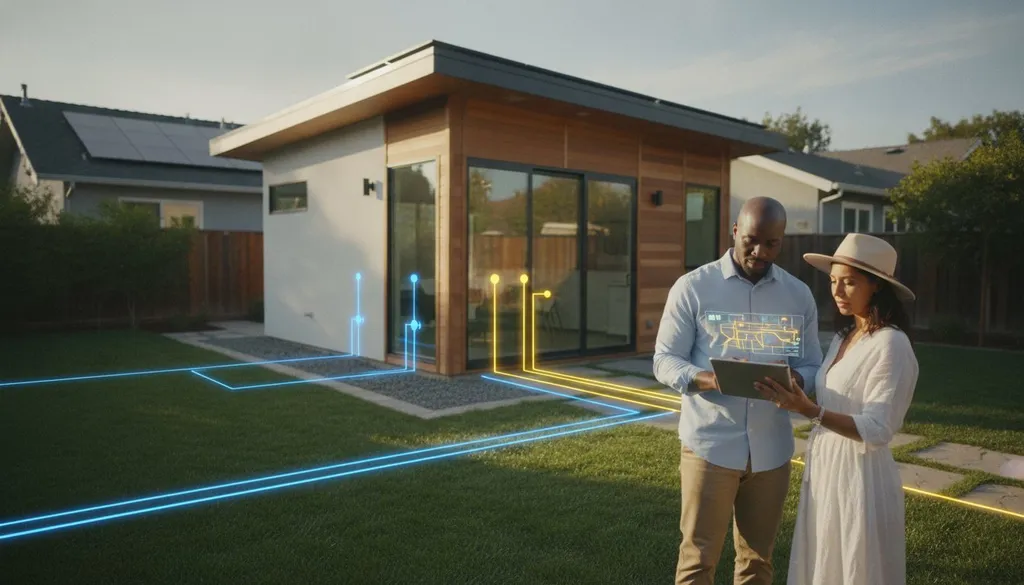
Lot topography is a primary driver of budget variance. If your property is on a hillside, you can expect to add $20,000 to $50,000 in foundation work alone compared to a flat lot. These costs stem from the need for caissons, grade beams, and specialized engineering to ensure the structure remains stable during seismic events. Additionally, the "Utility Distance Factor" plays a significant role. Trenching sewer and water lines 100 feet across a yard is exponentially more expensive than a 10-foot run, especially if the path requires cutting through and replacing existing concrete or landscaping.
Hillside and Grading Challenges in LA
Building in Los Angeles often involves navigating complex environmental overlays. Certain neighborhoods, such as those in the Fairfax or Miracle Mile districts, are designated as Methane Zones. These areas require specialized mitigation systems, including vapor barriers and vent pipes, which increase your site prep costs. If your property sits in a high-risk fault zone, seismic engineering requirements will be more rigorous. Retaining walls are another hidden budget killer. If your backyard requires grading to create a level building pad, the cost of these walls can quickly consume your contingency fund before the first wall is framed.
Utility Infrastructure and Panel Upgrades
Older Los Angeles properties often lack the electrical capacity to support an additional living unit. If your main house still operates on a 100-amp service, a 200-amp panel upgrade becomes mandatory to handle the increased load from the ADU's appliances and HVAC system. Sewer lateral inspections are equally critical. If your existing pipe is clay or shows signs of root intrusion, the city may require a full replacement before signing off on your project. Review our ADU utility connection costs guide (opens in a new tab) for a deeper look at these technical requirements.
Because these variables are unique to your specific address, generalized estimates only go so far. To get a precise understanding of your lot's constraints and potential costs, match with vetted contractors (opens in a new tab) who specialize in the Los Angeles market. They can conduct a site assessment to identify these hurdles early, ensuring the adu cost per square foot los angeles 2026 you budget for is the one you actually pay.
Calculating Your ROI and Getting an Accurate 2026 Quote
While the initial adu cost per square foot los angeles 2026 requires a significant upfront investment, it is essential to shift your perspective from construction expense to long-term asset value. An ADU is one of the few home improvements that provides both immediate functional utility and a clear path to financial recovery through rental income or property appreciation. In the high-demand Los Angeles market, these units function as a stabilizing force for a homeowner's portfolio, often paying for themselves well before the loan term expires.
The ROI of a Los Angeles ADU
Permitted ADUs in LA County historically contribute to a substantial increase in property value. Industry professionals report that a well-executed unit can add significantly to a home's resale price, often far exceeding the "cost per foot" spent on construction. Looking toward the 2026 rental market, projections suggest that studio and one-bedroom units will continue to command premium rates due to the ongoing housing shortage in Southern California. The long-term equity gain from a secondary dwelling typically outweighs the initial construction debt within the first decade of ownership. This makes the project a strategic move for those looking to offset their primary mortgage or generate passive retirement income.
How to Secure a Fixed-Price Contract
Relying on a "ballpark" quote is a dangerous strategy in the 2026 construction climate. A generic estimate often ignores the site-specific hurdles like utility trenching or methane mitigation that we discussed previously. To protect your budget, you must insist on a detailed "Scope of Work" document that accounts for every phase of the project, from the first permit filing to the final coat of paint. This level of granularity is the only way to transition from a rough estimate to a fixed-price contract that prevents cost creep.
The most effective way to bridge the gap between a calculator estimate and a builder's reality is to use ADUDesk contractor matching (opens in a new tab). We connect you with vetted builders who understand the Los Angeles market and provide transparent, data-backed bids. By starting with a professional match, you ensure that your adu cost per square foot los angeles 2026 is based on actual site conditions rather than optimistic guesses. Take the first step toward an informed build and start your ADU feasibility check today (opens in a new tab) to verify what is possible on your specific lot.
Taking the Next Step Toward Your 2026 ADU Build
Budgeting for a backyard home in Southern California is about more than just square footage. You now understand that the adu cost per square foot los angeles 2026 market is driven by all-in expenses, including LADBS fees and site-specific infrastructure. By accounting for variables like utility distances and topography early, you can avoid the "cost creep" that stalls many projects. Your focus should now shift from gathering general data to securing a precise, site-specific plan.
Transitioning from a ballpark estimate to a shovel-ready project requires the right partners. Use our free local rule checker to verify your lot's feasibility, and then access our real-time 2026 pricing data to refine your financial framework. When you're ready to move forward, we can help you find vetted ADU contractors in Los Angeles (opens in a new tab) from our network of over 100 local builders. Starting with a professional match ensures your quotes are grounded in reality rather than optimistic guesses.
Building an ADU is a significant journey, but with a reliable framework and expert matching, you can proceed with confidence. Your new unit isn't just an extra room; it's a strategic investment in your property's future and your family's long-term financial stability. You've done the research, and now you have the tools to build with certainty.
Frequently Asked Questions
Is $250 per square foot a realistic budget for an ADU in Los Angeles in 2026?
No, a $250 budget is generally insufficient for an all-in project in the current market. Most Los Angeles builds now start between $350 and $550 per foot due to the rising costs of skilled labor and strict Title 24 energy requirements. Attempting to build at a lower price point often leads to compromises in material quality or hidden costs surfacing later. Use a data-driven calculator to see a realistic adu cost per square foot los angeles 2026 range for your lot.
How much are the permit fees for an ADU in Los Angeles?
Permit fees typically range from $5,000 to $15,000 depending on the project's size and complexity. These fees cover LADBS plan checks, building permits, and administrative processing. Larger units or those on hillside lots often incur higher costs due to additional engineering reviews. You should also account for separate utility connection fees from DWP and Sanitation. Always verify current LADBS fee structures before finalizing your pre-construction budget to ensure your numbers are accurate.
Does the cost per square foot include solar panels and landscaping?
Most all-in construction estimates include mandatory solar panel installations but exclude extensive landscaping. California’s Title 24 mandate requires solar for all new detached ADUs; therefore, contractors usually bake this into their base price. Landscaping is often treated as a separate phase because costs vary wildly based on plant selection and irrigation needs. Clarify with your builder exactly what is included in their scope of work to avoid budget gaps during the final stages of your project.
Why is a garage conversion sometimes more expensive per square foot than new construction?
Garage conversions often have higher per-foot costs because you are spreading fixed expenses over a smaller area. While the shell exists, you must still pay for a kitchen, bathroom, and HVAC system. These high-cost items drive up the average when the total square footage is low. Additionally, upgrading an old foundation or leveling a slab can be more labor-intensive than starting from scratch on a clean building pad. Focus on the total project price rather than just the square foot average.
What are the school impact fees for ADUs in Los Angeles County?
School impact fees apply only to ADUs that are 750 square feet or larger. These fees are calculated based on the total livable area and are paid directly to the local school district. If your unit is 749 square feet or smaller, you are legally exempt from these charges under state law. For larger projects, expect these fees to add several thousand dollars to your total soft cost budget. Factor this threshold into your design phase if you are looking to minimize municipal expenses.
Can I save money on my ADU by using a prefab or modular unit in 2026?
Prefab units can save time, but they don't always result in a lower adu cost per square foot los angeles 2026 budget. While the unit itself is built in a factory, you still face local costs for site preparation, foundations, and utility trenching. Crane rentals for installation can also be expensive in tight Los Angeles neighborhoods. Compare the total delivered and installed price against a traditional stick-built quote to determine the true value for your specific property layout.
How much should I budget for architectural and engineering plans in LA?
Budget between $8,000 and $15,000 for a complete set of architectural and structural engineering plans. This range covers the detailed drawings required for LADBS submittal and Title 24 energy calculations. Complex sites, such as those in methane zones or on steep hillsides, may require additional soil reports or specialized structural engineering. Investing in high-quality plans early helps prevent expensive change orders once construction begins. It also ensures a smoother permit approval process with city officials.
Will building an ADU increase my property taxes in Los Angeles?
Yes, but only for the value of the new construction. Your primary home will not be reassessed at its current market value. Instead, the Los Angeles County Assessor will perform a blended assessment. This means they add the value of the ADU to your existing property tax basis. While your annual bill will increase, the additional property tax is typically a small fraction of the rental income or equity gain the unit provides. This makes it a sustainable long-term investment.